Lenovo’s ThinkStation P4 Targets the ‘Prosumer’ Gap With Modular Intel Power
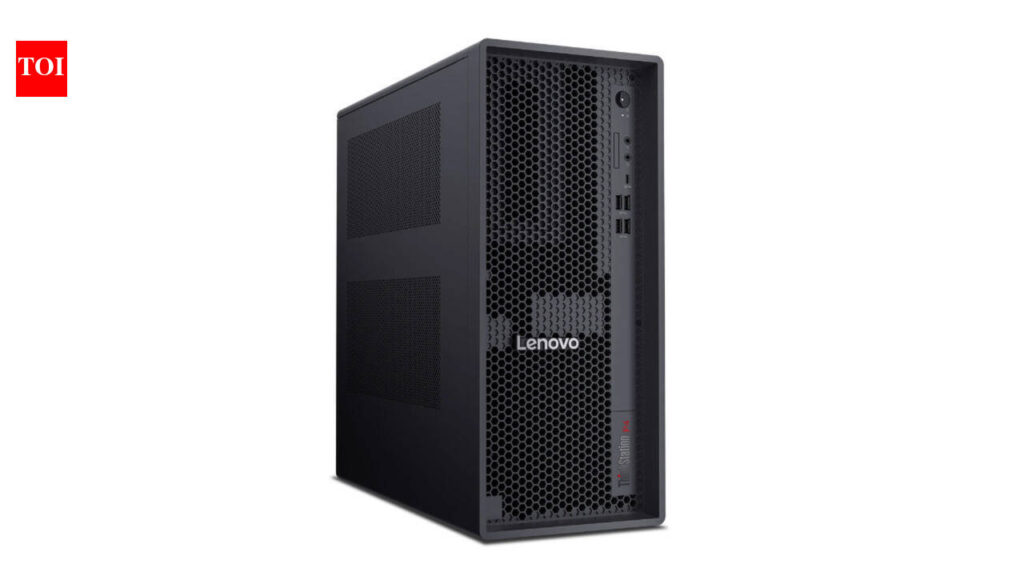
Table of Contents
The Middle Ground of Professional Computing
Lenovo is attempting to capture a specific, often overlooked segment of the creative market with the launch of the ThinkStation P4. While the industry has long been split between consumer-grade gaming rigs and massive, rack-mounted enterprise servers, the P4 is designed for the ‘prosumer’—the independent architect, the boutique 3D artist, and the software developer who needs stability without the footprint of a data center.
The P4 arrives at a time when the line between a high-end desktop and a professional workstation has blurred. However, Lenovo is betting that ISV (Independent Software Vendor) certifications and specialized thermal management will be enough to justify the ‘ThinkStation’ badge over a custom-built PC. By certifying the hardware for software like AutoCAD, SolidWorks, and Adobe Creative Cloud, Lenovo is selling peace of mind—essentially promising that the system won’t crash during a critical render.
Under the Hood: Intel Performance and Thermal Logic
At the heart of the ThinkStation P4 is the latest generation of Intel Core processors, providing a balance of high clock speeds for single-threaded tasks and multi-core efficiency for rendering. Unlike consumer desktops that often rely on sheer wattage and loud fans, the P4 utilizes a redesigned chassis airflow system. This is critical because professional workloads often keep CPUs at 100% utilization for hours, a scenario where consumer-grade cooling typically throttles performance.
Memory configurations are equally aggressive, supporting high-capacity DDR5 RAM to handle massive datasets and complex 4K video timelines. For graphics, Lenovo has partnered with NVIDIA to offer a range of RTX professional GPUs. While a GeForce card might be faster in a benchmark, the RTX professional line provides the ECC (Error Correction Code) memory necessary for precision engineering and scientific simulations where a single flipped bit could ruin a project.
Modularity and the ‘Right to Repair’ Trend
One of the most interesting aspects of the P4 is its internal layout. Lenovo has leaned into a modular approach, making it significantly easier for IT managers or individual owners to swap components without dismantling the entire machine. This shift reflects a broader industry trend toward sustainability and longevity, moving away from the soldered-down components common in laptops and small-form-factor PCs.
The chassis supports multiple storage bays, allowing users to mix and match NVMe Gen4 drives for speed and high-capacity HDDs for archival storage. This flexibility is a direct response to the needs of digital content creators who struggle with the constant expansion of project file sizes.
Positioning in a Competitive Market
The ThinkStation P4 enters a crowded field, facing direct competition from the HP Z-series and Dell’s Precision line. To win, Lenovo isn’t just competing on specs, but on reliability. The P4 is built to MIL-STD 810H standards, meaning it can survive environments that would kill a standard home office PC.
For the end user, the P4 represents a calculated investment. It isn’t the cheapest option on the market, but it eliminates the ‘troubleshooting tax’—the hours spent updating drivers or fixing stability issues that plague non-certified hardware. As AI-integrated workflows become standard in creative software, having a stable, certified hardware base will likely become more important than raw GHz numbers.


