Huawei’s Mate X gamble: Can a €2,300 foldable break the Apple-Samsung duopoly?
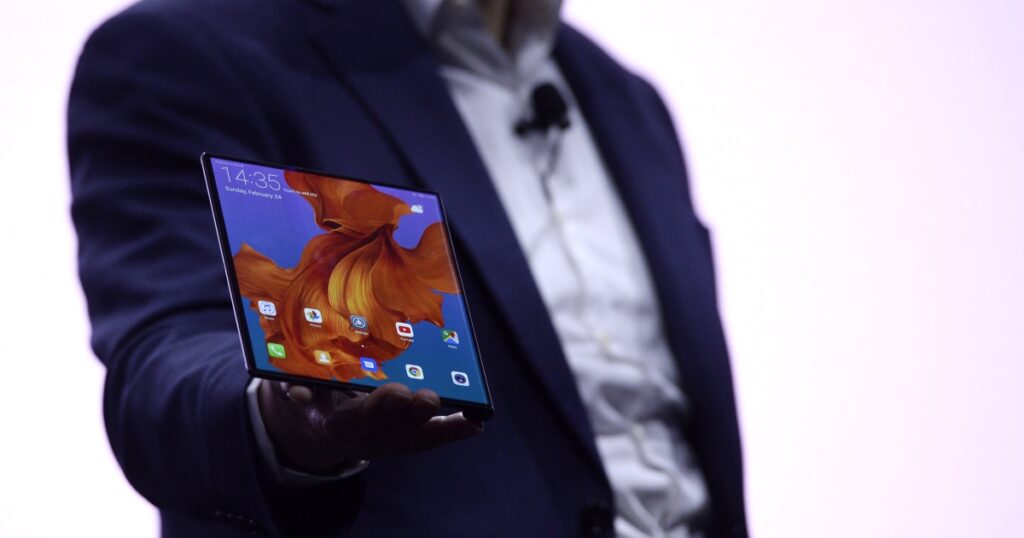
Table of Contents
The High-Stakes Pivot to Foldables
On the eve of MWC Barcelona, Huawei has officially entered the race for the next evolution of the smartphone, unveiling the Mate X. The device is not just a technical exercise in flexibility; it is a strategic bid by the Chinese giant to move beyond its reputation as a budget-friendly alternative and establish itself as a primary innovator in the luxury hardware space.
The Mate X arrives at a precarious moment for the industry. With global smartphone sales stagnating and consumers holding onto their devices longer due to a perceived lack of meaningful innovation, Huawei is betting that a massive 8-inch foldable screen is the catalyst needed to trigger a new upgrade cycle. However, this innovation comes with a steep price tag: 2,299 euros (approximately $2,600), positioning it as one of the most expensive consumer handsets ever released, comfortably eclipsing the nearly $2,000 Samsung Galaxy Fold.
Engineering the Bend
The Mate X distinguishes itself from Samsung’s approach through its outward-folding design. While the Galaxy Fold closes like a book to protect the screen, the Mate X wraps its display around the exterior. This allows users to interact with the device while it is folded, effectively treating it as a standard smartphone before unfolding it into a tablet-sized workstation.
According to Richard Yu, CEO of Huawei’s consumer business group, the development of the device was an answer to the conflicting demands for larger screens and portable battery life. Yu noted that the engineering team spent three years specifically perfecting the hinge mechanism to ensure the device closes flush, eliminating the gap that has plagued earlier foldable prototypes.
The Geopolitical Shadow
Despite the technical achievement, the Mate X’s global trajectory is inextricably linked to the escalating trade and security tensions between Washington and Beijing. While Huawei has successfully penetrated European markets—with Gartner estimating a 13% market share in the region—the U.S. market remains largely closed.
The U.S. government continues to categorize Huawei as a cybersecurity risk, alleging the company could facilitate espionage for the Chinese state. These concerns are compounded by recent criminal charges against the company and its CFO, Meng Wanzhou, involving allegations of fraud and the theft of trade secrets from T-Mobile. As the U.S. lobbies its European allies to exclude Huawei equipment from new 5G infrastructure, the company’s ability to market high-end consumer tech in the West may be hampered by its identity as a geopolitical adversary.
Breaking the Duopoly
For years, the smartphone hierarchy has been a rigid structure: Samsung and Apple at the top, with the rest of the industry fighting for the remnants. Huawei is the only player with the scale and capital to realistically challenge this. IDC data indicates that Huawei has consistently hovered around the second or third spot globally, often swapping places with Apple depending on the quarter.
The company’s strategy has been a dual-track approach: flooding emerging markets with affordable handsets while simultaneously launching luxury models in Europe to siphon high-end users. The Mate X is the apex of this strategy. By targeting the “prosumer” who wants a tablet and a phone in one, Huawei is attempting to build a brand voice that transcends the “challenger” label.
Whether the Mate X succeeds depends on if consumers view the foldable form factor as a necessity or a novelty. As Thomas Husson of Forrester suggests, the technical specs are secondary to the user experience; Huawei must prove that a €2,300 phone provides a value proposition that justifies its cost in an era of diminishing returns for mobile hardware.


