Asus Debuts VM441 All-in-One in India, Bringing Snapdragon X Silicon to the Desktop
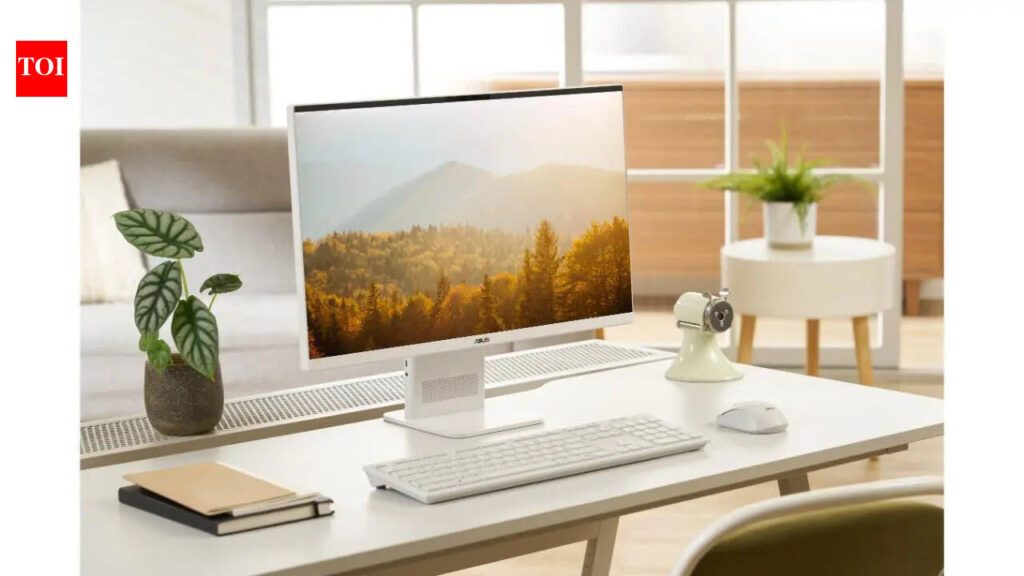
Table of Contents
A Shift Toward ARM on the Desktop
Asus is pushing the boundaries of the traditional desktop form factor in India with the launch of the VM441 All-in-One (AiO). While the industry has spent the last few months focusing on the “Copilot+ PC” revolution within laptops, the VM441 represents a rare move: bringing the Qualcomm Snapdragon X processor architecture to a stationary, all-in-one chassis.
Starting at Rs 1,01,990, the VM441 isn’t just a spec refresh of a standard office machine. By integrating the Snapdragon X platform, Asus is attempting to solve the perennial problem of the All-in-One PC: balancing thermal management with performance. Traditional x86 chips from Intel and AMD often struggle in thin AiO frames, leading to aggressive thermal throttling. The ARM-based architecture of the Snapdragon X offers a higher performance-per-watt ratio, which theoretically allows the VM441 to maintain a slim profile without the loud fan noise typically associated with 24-inch desktops.
The Hardware Breakdown
The centerpiece of the VM441 is its 24-inch Full HD touchscreen. While 1080p may seem conservative for a 2026 release, the focus here is on utility and touch-responsiveness for home office and educational environments. The integration of a touchscreen is a logical step for an ARM-powered device, bridging the gap between a tablet’s immediacy and a workstation’s screen real estate.
Under the hood, Asus is offering storage configurations that scale up to 1TB, catering to users who handle larger local datasets. The machine comes bundled with Microsoft Office, signaling its intended position as a primary productivity hub rather than a secondary entertainment device. More importantly, the Snapdragon X processor enables the dedicated NPU (Neural Processing Unit) capabilities required for Microsoft’s latest AI features, allowing for local AI processing that doesn’t rely entirely on the cloud.
The Ecosystem Challenge
The success of the VM441 will likely depend on how well the software ecosystem has matured for ARM on Windows. For years, the primary friction point for ARM-based PCs has been app compatibility—specifically for legacy software and specialized drivers. However, with Qualcomm’s aggressive push and Microsoft’s Prism translation layer, the gap is narrowing.
For the average user, the VM441 offers a clean, cable-free desk setup with the promise of “intelligent performance.” In practical terms, this means better standby times and a snappier wake-from-sleep experience, mimicking the behavior of a smartphone or a MacBook. For the power user, the question remains whether the Snapdragon X can handle heavy multitasking and professional creative suites as effectively as a traditional desktop tower.
Market Positioning
At the Rs 1,01,990 price point, Asus is positioning the VM441 as a premium alternative to the mid-range iMac or high-end HP and Dell AiOs. It targets a demographic that values a minimalist aesthetic but requires more computing power than a basic Chromebook or a budget Windows tablet can provide.
The launch in India is a strategic test for Qualcomm and Asus. If the VM441 gains traction, it could signal a wider shift in the desktop market, where power efficiency and AI-native silicon begin to outweigh raw clock speeds in the home and small-office sectors.


