California Moves to Buffer Labor Market Against AI Displacement with First-of-Its-Kind Executive Order
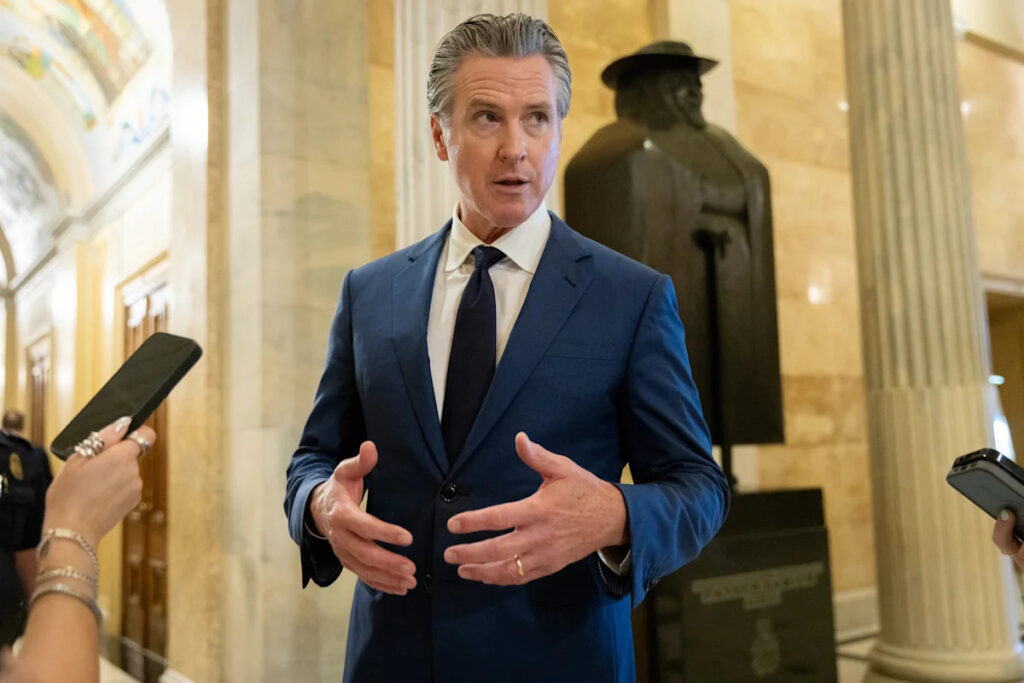
Table of Contents
A Policy Pivot for the Golden State
California is attempting to build a regulatory firewall between rapid AI advancement and total labor market collapse. Governor Gavin Newsom signed an executive order on Thursday that officially tasks state agencies with investigating how to mitigate the economic fallout as generative AI begins to dismantle traditional employment structures.
The directive isn’t a set of rigid laws—yet—but rather a mandate for a comprehensive research and policy sprint. Newsom has ordered state agencies to convene a coalition of academic institutions, economists, and industry leaders to gather hard data on AI-driven displacement. The goal is to move beyond reactionary measures and instead develop a proactive labor framework that can evolve as quickly as the LLMs (Large Language Models) causing the disruption.
“California has never sat back and watched as the future happened to us – and we won’t start now,” Newsom stated in a press release accompanying the order. He framed the move as a necessary reimagining of the social contract, arguing that the scale of AI’s impact requires a fundamental shift in how the state governs work and prepares its citizenry for an automated economy.
Beyond Simple Retraining: The ‘AI Playbook’
While many governments have suggested “upskilling” as a panacea for automation, Newsom’s order delves into more aggressive structural interventions. One of the most significant mandates is the creation of an “AI playbook” specifically designed to modernize job training programs, moving them away from static certifications toward more fluid, adaptive learning models.
The order also pushes agencies to explore a more radical concept: wealth-sharing. As AI increases corporate productivity and profit margins by reducing headcount, the Governor wants to investigate mechanisms that allow workers to share in that created wealth. This could potentially signal a move toward exploring modified basic income pilots or productivity taxes, though neither was explicitly named in the order.
Additional priorities include:
- Early Warning Systems: Developing signals to identify which sectors are most at risk of sudden mass displacement before the layoffs occur.
- Severance Standards: Reevaluating the adequacy of current severance packages in an era where a worker’s entire skill set might be rendered obsolete overnight.
- Subsidized Employment: Exploring state-funded roles to bridge the gap between displaced corporate roles and new emerging industries.
The Macro Pressure: Meta, Amazon, and the White-Collar Cliff
The timing of this order is not coincidental. The tech sector, headquartered largely within California’s borders, is already serving as a bellwether for this transition. This week alone, Meta announced layoffs affecting roughly 8,000 workers—about 10% of its workforce. This follows a wave of thousands of cuts at Amazon, Oracle, and Cloudflare, many of which are being attributed to a strategic pivot toward AI-centric operations rather than simple cost-cutting.
The fear is that this is no longer just a “tech industry problem.” Dario Amodei, co-founder of Anthropic, has previously suggested that nearly half of white-collar jobs could be eliminated within the next five years. If that trajectory holds, the displacement will move from software engineers to paralegals, accountants, and middle managers at a pace the current social safety net is not equipped to handle.
A Looming Federal Clash
Newsom’s aggressive stance puts California on a collision course with the current federal trajectory. While California is doubling down on safety, transparency, and worker protections, the Trump administration has broadly championed a “hands-off” approach to AI development. The federal government has frequently sought to preempt state-level regulations to ensure a unified, business-friendly environment for AI firms.
This creates a fragmented regulatory landscape where AI companies may find themselves operating under two entirely different sets of expectations: a federal government prioritizing speed and dominance, and a state government prioritizing labor stability and ethical guardrails. For the companies involved, this tension could lead to significant legal ambiguity as California attempts to rewrite the rules of employment in the age of intelligence.


