Motorola’s 2026 Razr Lineup Bets on ‘Vibes’ Over Specs in a Crowded Foldable Market
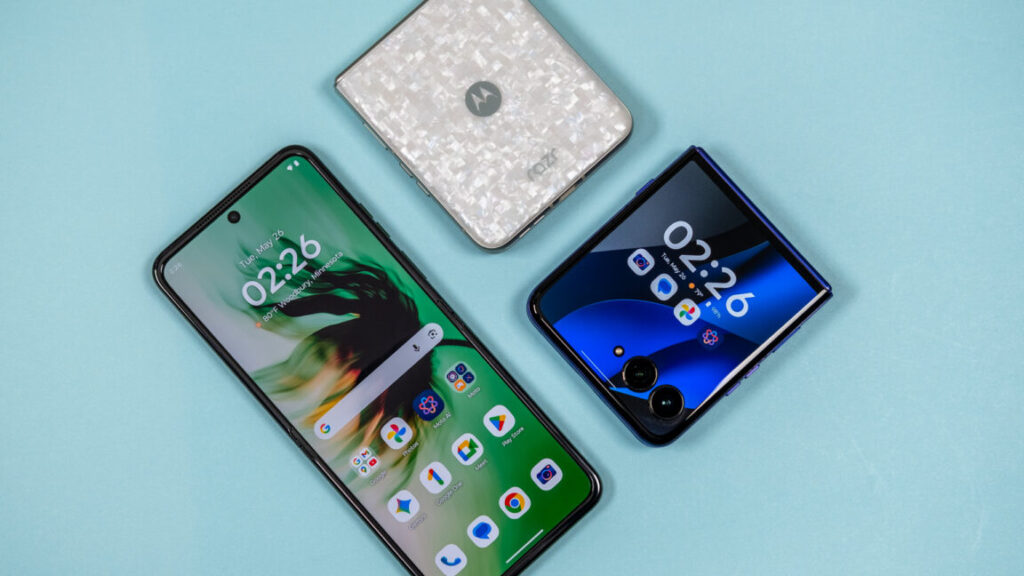
Table of Contents
Aesthetic Ambition in a Commodity Market
For several years, the Razr flip phones were the undisputed center of Motorola’s mobile strategy. In 2026, the narrative has shifted slightly with the introduction of the Razr Fold—a tablet-style foldable attempting to carve out a space in a luxury segment dominated by Samsung. However, for the average consumer, the traditional flip form factor remains the more practical and financially viable entry point into the foldable ecosystem.
In an era where smartphones have largely become utilitarian slabs, Motorola is leaning into the concept of ‘vibes.’ While competitors like Apple and Google focus on incremental camera leaps and AI integration, the 2026 Razrs are designed as fashion statements. With Pantone-certified colorways and a variety of tactile finishes—including vegan leather, synthetic fabrics, and wood panels—these devices are arguably the most visually distinct phones on the market today.
The External Screen Gamble
The defining feature of the Razr lineup continues to be its expansive external display. Motorola has pushed this further than Samsung’s Z Flip series, offering a level of utility that allows users to manage notifications and run a curated selection of mini-apps without ever unfolding the device.
This design choice serves a dual purpose. On a technical level, it maximizes the utility of the closed phone. On a psychological level, it acts as a digital buffer. By providing just enough functionality to reply to a message or check a calendar event, the external screen can steer users away from the ‘doom scrolling’ typically associated with the primary internal display. Furthermore, the external screen transforms the primary rear camera into a high-quality selfie mirror, bypassing the mediocre quality of the internal punch-hole cameras.
The Durability Dilemma
Despite the luxury feel and titanium-reinforced hinges, the inherent physics of a folding screen remain a point of contention. Motorola claims thousands of folds of durability, but the reality of long-term ownership differs from the brief window of a professional review cycle. While a reviewer might not see a screen failure in two weeks, long-term user reports consistently highlight the risk of OLED degradation at the crease.
Environmental resilience is another area where the Razr trails behind traditional ‘slab’ phones. With an IP48 rating, the devices offer standard water resistance, but they remain vulnerable to fine particulate ingress. Dust and grit entering the hinge mechanism can lead to mechanical failure over time—a risk that is virtually non-existent in a standard iPhone or Pixel.
The Financial Equation
For many buyers, the Razr’s beauty is obscured by the inevitable addition of a rugged OtterBox or similar armored case. For those who prioritize protection over aesthetics, the premium materials and striking colors of the 2026 Razr become irrelevant, making the device a poor value proposition compared to a flagship non-foldable.
When factoring in the necessary cost of specialized insurance to cover potential screen failures, the Razr becomes a significant financial commitment. It doesn’t offer the multitasking power of a tablet-fold and it doesn’t match the raw processing consistency of the top-tier Samsung or Apple flagships. Ultimately, the 2026 Razr is a device for the enthusiast who values form as much as function, provided they are willing to accept the fragility that comes with the fold.


