Huawei’s Mate X Bets on Foldable Screens to Break the Apple-Samsung Duopoly
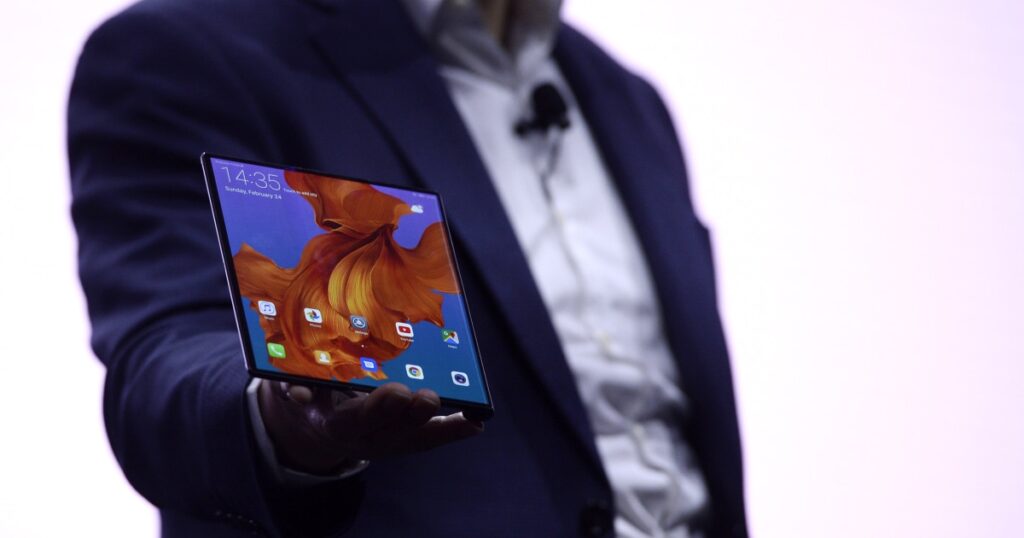
Table of Contents
A Bold Pivot Toward Bendable Hardware
On the eve of Mobile World Congress (MWC) in Barcelona, Huawei has officially entered the foldable fray with the unveiling of the Mate X. The device represents more than just a hardware experiment; it is a strategic attempt by the Chinese giant to shatter the perceived innovation plateau of the smartphone industry and carve out a luxury segment that rivals the grip of Apple and Samsung.
The Mate X is designed to solve the perpetual tension between user demand for larger displays and the physical constraints of pocketability. When unfolded, the device reveals an 8-inch screen, effectively transitioning the handset into a small tablet. Unlike the Samsung Galaxy Fold, which features a screen that folds shut, the Mate X utilizes a wrap-around design. This allows users to interact with the device even when it is closed, maintaining utility without requiring the user to fully deploy the hinge.
Richard Yu, CEO of Huawei’s consumer business group, emphasized that the device is the result of an intensive three-year engineering effort specifically focused on the hinge mechanism—a critical failure point for previous foldable prototypes. By eliminating the gap when shut, Huawei is positioning the Mate X as a more mature alternative to its competitors, though it comes at a premium price. Slated for a mid-year release, the Mate X will retail for 2,299 euros (approximately $2,600), comfortably surpassing the price point of the Galaxy Fold.
The 5G Integration and Market Positioning
Beyond the hardware form factor, the Mate X serves as a flagship vessel for 5G connectivity. As next-generation mobile networks begin their global rollout, Huawei is leveraging its dual identity as both a network infrastructure provider and a device manufacturer to ensure seamless integration. However, this synergy is exactly what has drawn the scrutiny of Washington.
The launch occurs against a backdrop of intensifying geopolitical friction. The U.S. government has repeatedly flagged Huawei as a cybersecurity risk, alleging that the company could facilitate state-sponsored espionage. These concerns have led to a concerted effort by the U.S. to lobby European allies to exclude Huawei equipment from their 5G build-outs. This regulatory cloud is further darkened by criminal charges filed against the company and CFO Meng Wanzhou, involving allegations of fraud and the theft of trade secrets from T-Mobile.
Challenging the Global Hierarchy
Despite the political headwinds, Huawei’s growth trajectory has been aggressive. While Apple and Samsung have long dominated the global conversation, IDC data reveals that Huawei has consistently jockeyed for the number two spot in total shipments. The company’s strategy has been a two-pronged attack: offering high-value, affordable handsets for emerging markets while simultaneously launching ultra-premium devices to lure high-net-worth users in Europe and China.
In Europe, the brand’s footprint is expanding rapidly. According to Gartner, Huawei now accounts for roughly 13% of the European smartphone market, with significant gains in Germany, France, and Spain. Yet, the U.S. market remains a fortress that Huawei cannot seem to breach. Analysts suggest that the barrier is no longer technical or price-driven, but rather a branding crisis. With the U.S. government framing the company as a cyber-adversary, the brand’s ability to build consumer trust in North America is virtually non-existent.
For the broader industry, the Mate X represents a gamble on the ‘foldable’ era. While analysts like Thomas Husson from Forrester argue that it will take significant time for a critical mass of consumers to adopt bendable tech, the move signals that the industry is desperate to move past the iterative ‘slab’ design. For Huawei, the Mate X is not just a phone—it is a declaration that they are no longer content being a ‘challenger’ brand, but intend to lead the next hardware cycle.


