Leaked DJI Osmo Pocket 4 Renders Hint at a Pro Model and a Massive Sensor Leap
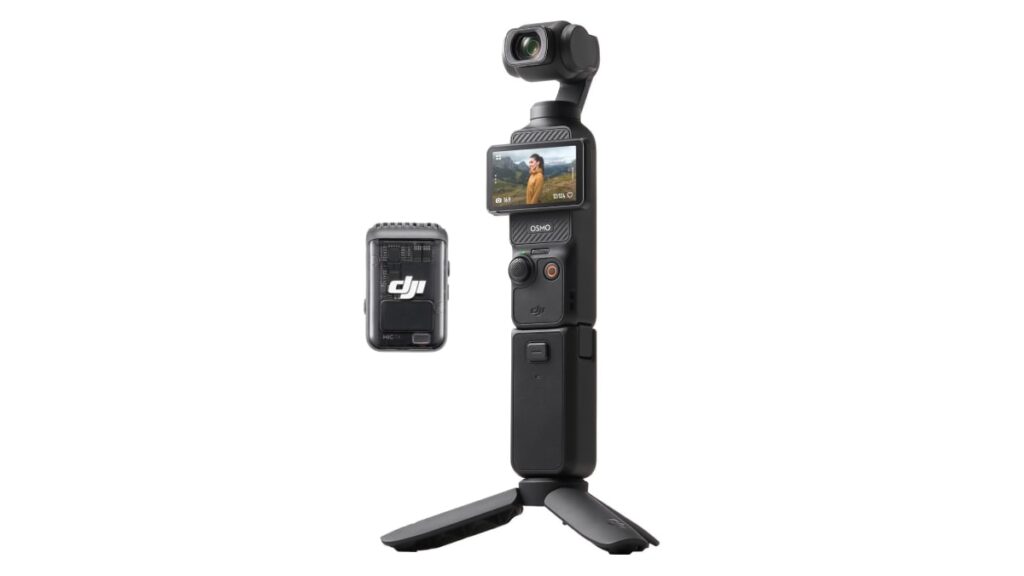
Table of Contents
A sudden shift in the vlogging landscape
DJI is notoriously tight-lipped about its product pipeline, but the silence has been broken. Leaked renders and accessory kits for the upcoming Osmo Pocket 4 have surfaced on X, shared by tipster Igor Bogdanov (@Quadro_News), suggesting that DJI isn’t just iterating on the Pocket 3—they are attempting to bridge the gap between consumer vlogging tools and professional cinematography gear.
While the Pocket 3 was already praised for its 1-inch sensor and rotating screen, the leaks point toward a significant bump in capture capabilities. The most striking claim is the support for 4K at 240fps. If verified, this would place the Pocket 4 in a rare tier of compact cameras capable of ultra-high-resolution slow motion, moving it beyond simple social media clips and into the realm of high-end B-roll production.
The ‘Pro’ Variable: A New Strategy?
Perhaps the most intriguing detail in the leak is the apparent existence of a DJI Osmo Pocket 4 Pro. Until now, DJI has generally stuck to a single-model release for the Pocket line, offering “Creator Combos” to differentiate packages rather than hardware tiers.
Introducing a Pro variant suggests DJI is eyeing a different demographic—professional videographers who need more robust bitrates, perhaps an upgraded cooling system to handle the heat of 4K 240fps recording, or an expanded set of manual controls. Whether this is a separate SKU or a misunderstood bundle remains to be seen, but the imagery suggests a distinct hardware differentiation that could disrupt the current pricing structure of the lineup.
Analyzing the Accessory Ecosystem
The leaked images don’t just show the camera; they reveal an aggressive push toward a complete production ecosystem. The reported bundle is significantly more comprehensive than previous iterations, including a hard-shell case and a padded zip case, which hints at a product designed for travel and rugged field use rather than just home content creation.
More importantly, the inclusion of the DJI Mic 2 system—complete with transmitters, windscreens, and magnetic clips—confirms that audio integration remains a pillar of the Pocket series. By bundling a wide-angle lens and a magnetic fill light, DJI is effectively selling a “studio in a pocket,” reducing the need for third-party adapters that often compromise the device’s compact form factor.
Technical Implications and Market Positioning
If the Osmo Pocket 4 truly maintains a 1-inch sensor while pushing frame rates to 240fps, the primary challenge will be thermal management. Small-form-factor cameras often struggle with overheating during high-bitrate recording. It will be critical to see if the “Pro” model addresses this with an active cooling solution or a redesigned chassis.
This move puts DJI in direct competition not only with the iPhone 15 Pro and Samsung S24 Ultra’s cinematic modes but also with dedicated vloggers’ cameras from Sony’s ZV line. The advantage for DJI remains the mechanical gimbal—something a smartphone cannot replicate—combined with a sensor size that outperforms most mobile devices in low-light scenarios.
With the official event slated for Thursday, the industry is watching to see if these leaks represent the final retail product or a set of prototypes. If the Pro model is real, it marks a strategic pivot for DJI, transforming the Osmo Pocket from a convenient accessory into a legitimate professional tool.


