The Kindle Dilemma: Does the Paperwhite Actually Justify the Price Jump?
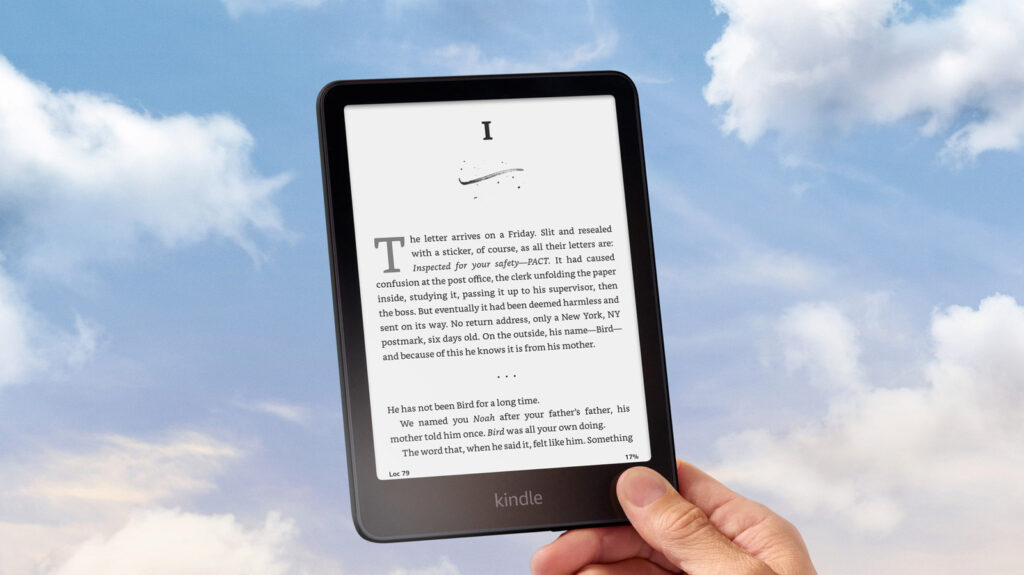
Table of Contents
The thin line between ‘enough’ and ‘premium’
For the casual reader, the value proposition of an e-reader is simple: a distraction-free screen that doesn’t fatigue the eyes. For years, Amazon has played a careful game of product segmentation, offering a base Kindle for the budget-conscious and a Paperwhite for those willing to pay a premium for a few key refinements. On paper, they do the same thing. In practice, the gap between them is where the real decision happens.
With Amazon recently streamlining its lineup and shifting support away from legacy models, the question of whether to stick with the base model or move up to the Paperwhite has become more pressing. It is no longer just about a slightly larger screen; it is about how the hardware handles the specific environments where people actually read—the bathtub, the airplane, or a dark bedroom.
The ergonomics of screen real estate
The most immediate difference is the physical footprint. The base Kindle maintains a compact 6-inch display, making it an ideal companion for commuters who need to slip a device into a jacket pocket. However, the Paperwhite has pushed its display to 7 inches across its standard, Kids, and Signature editions. While an inch may seem negligible, the cumulative effect on a reader is a noticeable reduction in page turns per chapter.
But that extra screen real estate comes with a weight penalty. The base Kindle clocks in at approximately 5.56 ounces, while the Paperwhite tips the scales at 7.4 ounces. For those who read for hours on end with a single hand, that nearly two-ounce difference can lead to wrist fatigue over time. It is a classic trade-off between portability and immersion.
Lighting and the ‘Warmth’ Factor
Where the Paperwhite truly separates itself is in the lighting array. While both devices feature front-lights, the Paperwhite includes an adjustable warm light. This isn’t just a cosmetic change; it is a functional tool for circadian rhythm management. By shifting the color temperature from a stark, cool white to a soft amber, the Paperwhite reduces blue light exposure, which is critical for those who read immediately before sleep.
The base model lacks this granular control, leaving users with a more clinical lighting experience. For the heavy night-reader, the warm light is often the single most compelling reason to spend the extra money, transforming the device from a digital tablet into something that more closely mimics the feel of a physical book under a bedside lamp.
Durability and the ‘Waterproof’ Peace of Mind
Then there is the matter of resilience. The Paperwhite carries an IPX8 rating, meaning it can withstand immersion in up to two meters of fresh water for up to 60 minutes. The base Kindle lacks this protection. In a real-world context, this is the difference between panic and indifference when a device is dropped in a pool or splashed in a bath.
Beyond durability, Amazon has pushed a performance narrative, claiming the Paperwhite’s processor is roughly 20% faster than the standard model. In the world of E-ink, where screen refresh rates are naturally slow, a 20% boost isn’t transformative, but it is perceptible. Navigating the Kindle Store or flipping through a dense PDF feels slightly snappier on the Paperwhite, reducing the micro-stutters that can occasionally break a reader’s flow.
The aesthetic choice
Finally, there is the matter of personalization. Amazon has expanded the color palette for the Paperwhite, offering Raspberry and Jade alongside the traditional Black. The base model remains more conservative with Black and Matcha. While color is a secondary concern for most, it reflects the Paperwhite’s positioning as a lifestyle accessory rather than just a utility tool.