American Airlines Taps Starlink for Narrow-Body Fleet, Signaling SpaceX’s Dominance in In-Flight Connectivity
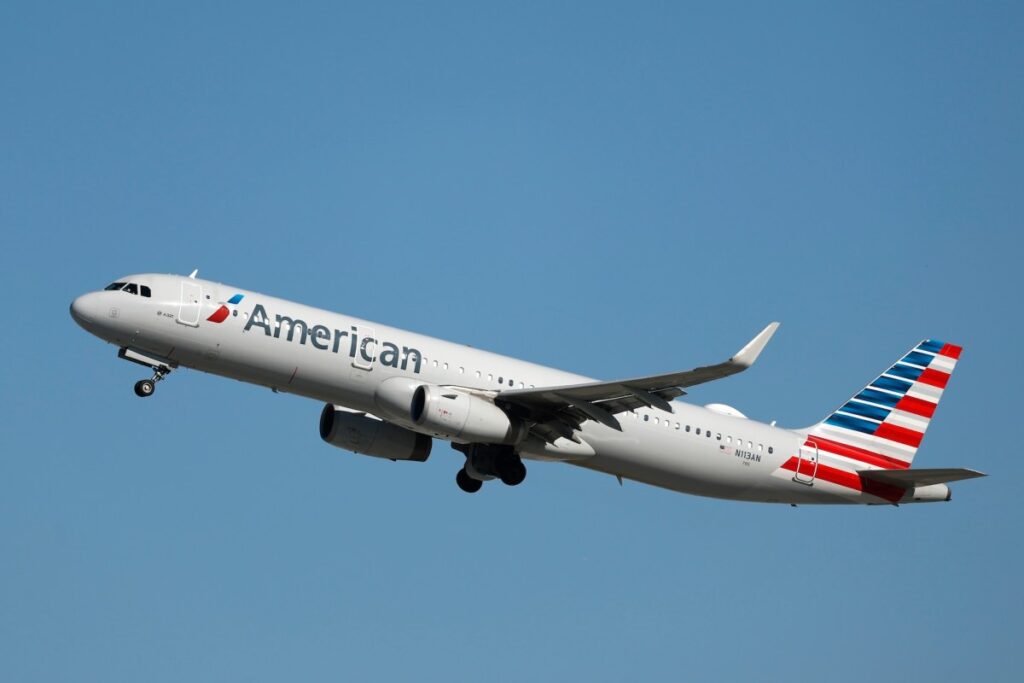
Table of Contents
A Strategic Shift in the Skies
American Airlines announced Tuesday a significant infrastructure upgrade to its connectivity suite, confirming plans to install Starlink hardware across more than 500 narrow-body Airbus aircraft starting early next year. The move marks a pivot toward low Earth orbit (LEO) satellite technology for one of the world’s largest carriers, signaling a broader industry trend where legacy aviation connectivity is being replaced by high-speed, low-latency broadband.
The rollout will specifically target the airline’s newer Airbus A321XLR and A320neo aircraft. Notably, the agreement excludes American’s Boeing fleet, suggesting a phased hardware validation process or a strategic decision to prioritize the efficiency of its Airbus narrow-body operations first. For passengers, this means a shift from the often-unreliable, throttled portals of the past to a service capable of supporting streaming and high-bandwidth applications at 30,000 feet.
The Economics of LEO vs. Geostationary
For decades, in-flight Wi-Fi relied on geostationary (GEO) satellites orbiting roughly 22,000 miles above Earth. While effective for basic coverage, the distance created a noticeable lag—known as latency—that made real-time applications nearly impossible. Starlink, operated by SpaceX, utilizes a constellation of satellites in low Earth orbit, just a few hundred miles up. This proximity drastically reduces the time it takes for data to travel, providing a user experience that closely mimics ground-based fiber optics.
This technical advantage is fueling a competitive squeeze on legacy providers like Viasat and Intelsat. By securing American Airlines, Starlink is not just adding a customer; it is capturing a critical piece of the North American domestic corridor. The deal follows a string of high-profile wins for SpaceX, with United Airlines, Southwest, Qatar Airways, and Lufthansa Group already integrating the service. Even Alaska Airlines, following its merger with Hawaiian Airlines, has moved toward the LEO ecosystem.
The IPO Play and Revenue Diversification
While the American Airlines deal is a victory for passenger experience, the underlying narrative is firmly rooted in SpaceX’s corporate trajectory. Starlink is currently the only business unit within the sprawling SpaceX empire that generates consistent, scalable commercial revenue. While the Falcon 9 and Starship programs dominate the headlines and government contracts, Starlink is the engine designed to sustain a public company.
The timing is critical. According to SpaceX’s IPO registration filings released last week, the company is preparing for a public offering projected for next month. To attract institutional investors, SpaceX needs to prove that Starlink is not just a niche product for rural homes, but a scalable B2B powerhouse capable of disrupting multi-billion dollar industries like aviation and maritime logistics.
The Looming Competition
Despite the current momentum, SpaceX is not without challengers. Amazon’s Project Kuiper is the most formidable threat, aiming to deploy its own LEO constellation to compete directly for enterprise contracts. If Amazon can leverage its AWS integration to offer a more seamless cloud-to-aircraft pipeline, the aviation industry may see a fragmented market where carriers choose between a SpaceX or an Amazon ecosystem.
For now, however, Starlink holds the first-mover advantage. By locking in the dominant narrow-body fleets of the largest US carriers, SpaceX is creating a high barrier to entry. The American Airlines contract serves as a powerful signal to the market that the transition to LEO is no longer a pilot project—it is the new standard for global aviation.


