Google Pivot: The ‘Googlebook’ Signals the End of the Chromebook Era
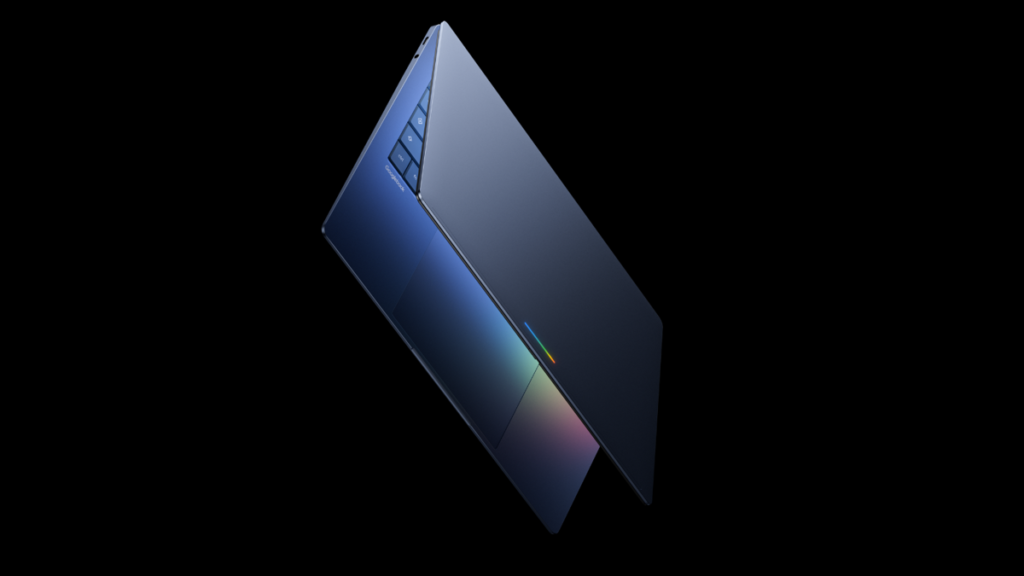
Table of Contents
A Fundamental Shift in Computing
Google is attempting to redefine the laptop category. At the Android Show: I/O Edition on Tuesday, the company unveiled the “Googlebook,” a new line of hardware that positions itself not as a traditional computer, but as an “intelligence system.”
While the industry has spent the last year chasing the “AI PC” trend—most notably with Microsoft’s Copilot+ branding—Google is taking a more aggressive architectural approach. The Googlebook isn’t just a laptop with an AI chip; it is a ground-up rethink of how a user interacts with a desktop environment. According to Alex Kuscher, Senior Director at Google, the move is a natural evolution of the Chromebook’s legacy. Fifteen years ago, Google built a machine for the cloud; now, it is building one for generative intelligence.
The OS Question: Beyond ChromeOS
The most significant revelation isn’t the hardware, but the software powering it. Google has avoided confirming that the Googlebook runs ChromeOS, instead referencing a “modern OS designed for Intelligence.”
For those tracking internal leaks, this is almost certainly the public debut of Project Aluminum. For months, reports have circulated about Google’s effort to merge the kernels of Android and ChromeOS to eliminate the friction between mobile apps and desktop productivity. The Googlebook appears to be the vessel for this convergence. By moving away from a browser-centric OS to an intelligence-centric one, Google can integrate Gemini deeper into the system level than a mere side-panel assistant.
Gemini as the Primary Interface
The hardware’s primary differentiator is the “Magic Pointer.” Unlike a standard cursor that simply selects text or clicks buttons, the Magic Pointer uses Gemini to interpret the visual context of the screen in real-time.
In the demonstrations provided by Kuscher, the cursor becomes an action tool. Wiggling the pointer over a date in an email allows the system to automatically schedule a calendar event, while selecting two disparate images—such as a room and a piece of furniture—triggers a generative visualization of how those items would look together. This moves the AI from a chat box into the actual workflow of the user.
Further deepening this integration is a “Create your Widget” tool, allowing users to build functional, personalized system widgets via natural language prompts, effectively letting the user program their own interface on the fly.
The Hardware Ecosystem
Google is not venturing into this new category alone. The first wave of Googlebooks will be produced by a coalition of established OEMs, including Acer, Asus, Dell, HP, and Lenovo. While specific technical specifications remain under wraps, Google’s marketing emphasizes a “Featherweight Design” paired with “Heavyweight Power,” suggesting a focus on the premium ultraportable segment.
Visually, the devices will be identified by a “glowbar” lightstrip on the lids, a distinct branding element that separates them from the sea of silver aluminum laptops.
Integration with the Android ecosystem remains a core pillar. Beyond running Android apps natively, Googlebooks will support an advanced casting feature that allows users to push mobile apps to the larger screen without installation. A “Quick Access” utility will also bridge the gap between devices, allowing users to search and manipulate files on their Android phones directly from the laptop’s file manager.
Market Positioning and Pricing
While Google has not released a price list, the “premium craftsmanship” mentioned by Kuscher suggests these will not be the budget-friendly devices that fueled the Chromebook’s dominance in education.
With high-end Chromebooks already pushing the $1,000 mark, the Googlebook is likely to target the professional and “prosumer” markets, competing directly with the MacBook Air and the latest Snapdragon-powered Windows laptops. The gamble is whether users are willing to abandon the familiarity of a traditional file-and-folder OS for an AI-driven experience.