The Price of a One-Way Trip: SpaceX and Pentagon Clash Over ‘Suicide Drone’ Billing
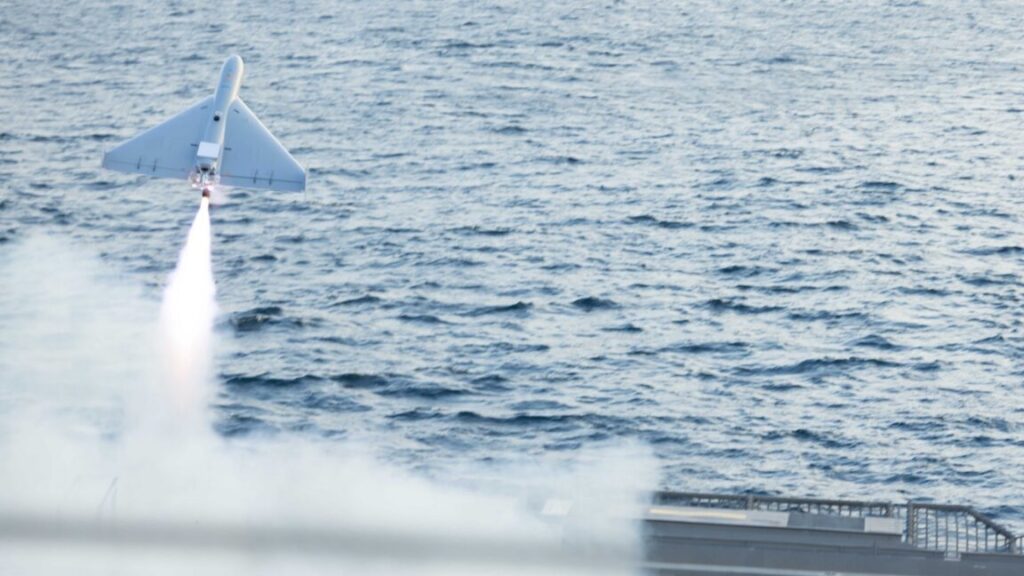
Table of Contents
A Costly Technicality in the Gray Zone
The friction between SpaceX and the U.S. Department of Defense has moved beyond geopolitical strategy and into the granular, often contentious world of subscription tiers and Terms of Service (ToS) violations. At the center of the latest dispute is the Low-cost Uncrewed Combat Attack System (LUCAS)—a fleet of “kamikaze” drones designed as a budget-friendly alternative to traditional missiles, reverse-engineered from Iranian technology.
According to reporting from Reuters, backed by Pentagon documents, a pricing war erupted over how these single-use drones connect to the sky. SpaceX allegedly demanded a price hike from $5,000 to $25,000 per connection for the drones’ satellite access. While $25,000 represents a monthly subscription fee, the drones in question are inherently disposable, detonating upon impact and rendering the monthly billing cycle a logistical absurdity for the military.
The Civilian vs. Government Divide
Elon Musk has pushed back against the Reuters narrative, calling the report “false,” yet his response on X (formerly Twitter) introduced a new layer of conflict: the distinction between Starlink and Starshield. Starlink is the consumer-facing constellation; Starshield is the dedicated, government-grade network designed for national security.
Musk alleges that the drones were incorrectly configured to use the civilian Starlink network, which explicitly prohibits the use of its terminals for weapon systems. “They made improper use of the Starlink civilian system for military purposes. Direct violation of terms of service,” Musk stated. He placed the blame squarely on the drone’s manufacturer, Spektreworks, suggesting the contractor failed to properly route the hardware through the Starshield infrastructure.
The Pentagon has denied any violation of its agreement. The technical ambiguity stems from the hardware itself; Starshield terminals are capable of connecting to both the commercial Starlink constellation and the restricted Starshield network, creating a gray area in how “improper use” is defined and detected.
The “Aviation Tier” Argument
The financial friction centers on SpaceX’s insistence that the LUCAS drones operate under conditions aligning with its “aviation tier”—a high-cost subscription designed for aircraft—rather than lower-cost land or mobility services. Pentagon officials argued that charging a monthly aircraft fee for a drone that may only be airborne for a few hours is an unreasonable billing model. Despite this, the Department of Defense ultimately yielded to the $25,000 price tag.
This tension persists at the highest levels of leadership. Deputy Secretary of Defense Steve Feinberg reportedly remained uneasy about the arrangement, leading to follow-up meetings in April with Terrence O’Shaughnessy, a retired four-star Air Force general now leading SpaceX’s defense business. Despite the friction, the U.S. government continues to double down on the technology, currently considering the purchase of over 3,500 additional Starshield terminal subscriptions.
Expansion into Direct-to-Cell Connectivity
The pricing disputes aren’t limited to weaponry. The two entities are reportedly at odds over the cost of providing internet access to Iranian citizens during government-imposed blackouts. In January, the U.S. reportedly smuggled 6,000 Starlink terminals into Iran to bypass state censorship.
When the Pentagon inquired about “direct-to-cell” service—which allows standard mobile phones to connect to satellites without a dedicated terminal—SpaceX reportedly proposed a staggering $500 million launch fee and a $100 million monthly operational cost. For a government already struggling with the pricing of disposable drones, these figures have sparked internal alarm within the defense establishment.
As SpaceX’s Starlink revenue hit $11.4 billion in 2025, the company’s leverage over the Pentagon grows. The U.S. military is increasingly dependent on a private entity whose CEO views terms of service violations and tiered pricing as primary levers of negotiation, echoing the earlier, similarly fraught disputes over satellite funding in Ukraine.


