Huawei Challenges Samsung and Apple with the Mate X: A High-Stakes Bet on Foldables and 5G
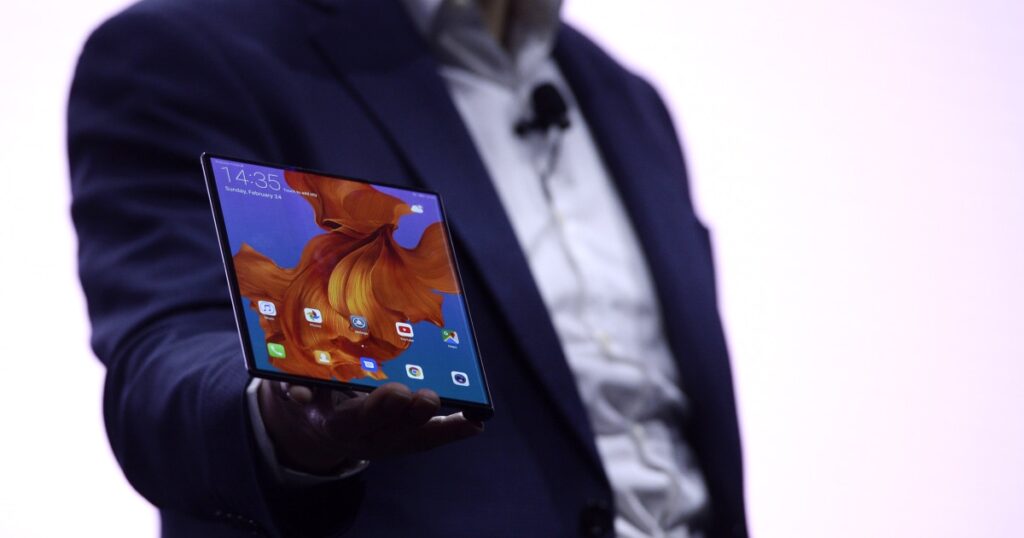
Table of Contents
A Pivot Toward the ‘Bigger Innovation’
On the precipice of MWC Barcelona, Huawei has signaled its intention to move beyond the shadow of the industry’s established giants with the unveiling of the Mate X. The device is more than just a hardware showcase; it is a strategic attempt by the Chinese firm to break the current stalemate in smartphone innovation, where consumers have largely stopped upgrading their devices due to a lack of meaningful differentiation.
Richard Yu, CEO of Huawei’s consumer business group, framed the Mate X as a direct response to the conflicting demands of modern users: the desire for a larger, tablet-like screen without sacrificing the portability of a handset. Unlike its primary competitor, the Samsung Galaxy Fold, the Mate X utilizes an outward-folding design. This allows the device to maintain a functional screen on the exterior when closed, effectively providing two different modes of interaction before the 8-inch display is fully unfurled.
The engineering focus, according to Yu, centered heavily on the hinge mechanism. After three years of development, Huawei claims to have eliminated the gap typically found in folding devices, creating a seamless transition that suggests a higher level of industrial maturity than previous prototypes in the category.
The Pricing War and Market Positioning
The Mate X enters the market at a premium, with a price tag of 2,299 euros (approximately $2,600). This positions it significantly above the Samsung Galaxy Fold, which entered the fray at nearly $2,000. This aggressive pricing is a clear indicator of Huawei’s goal: it is no longer content being the ‘affordable’ alternative. By pricing the Mate X as a luxury item, Huawei is attempting to capture the upper-crust consumer segment that has historically been the stronghold of Apple’s iPhone series.
The company’s ascent hasn’t been accidental. By diversifying its portfolio—offering budget-friendly models for emerging markets while simultaneously scaling its luxury line in Europe—Huawei has climbed to the third spot globally in smartphone sales, according to International Data Corp (IDC). In some quarters, the company has even briefly eclipsed Apple and Samsung for the top spot, demonstrating a scaling capability that few other hardware makers possess.
The Geopolitical Shadow
Despite the technical achievement of the Mate X, Huawei’s global expansion is colliding with a complex geopolitical landscape. The device’s 5G capabilities are a core selling point, yet the infrastructure required to support these speeds is at the center of a diplomatic tug-of-war. The U.S. government has spent years lobbying European allies to exclude Huawei equipment from their 5G rollouts, citing concerns that the company could facilitate digital espionage on behalf of the Chinese government.
These security allegations are compounded by legal turmoil. The company and its CFO, Meng Wanzhou, are currently embroiled in U.S. criminal charges involving allegations of fraud and the theft of trade secrets—specifically technology used by T-Mobile for smartphone testing. This legal cloud creates a paradoxical situation: while Huawei is winning the technical race in Europe and Asia, its brand is being cast as a ‘cyber-villain’ in the United States, making any attempt at North American market penetration nearly impossible.
The Struggle for Brand Identity
Industry analysts suggest that while the Mate X is a technical marvel, Huawei still faces a branding hurdle. Thomas Husson of Forrester notes that the company must evolve from being a ‘technology challenger’ to establishing a distinct brand voice that can compete with the lifestyle prestige of Apple. While Gartner estimates that Huawei now controls about 13% of the European market, the path to global dominance requires more than just superior hinges and 5G mods; it requires a level of trust and brand loyalty that is currently being eroded by international sanctions and security fears.
As Samsung and Apple grapple with a lull in sales and a lack of fresh ideas, Huawei’s pivot to foldables may be the catalyst that forces the rest of the industry to innovate. However, whether the Mate X becomes a commercial success or remains a high-priced curiosity depends largely on how the world balances its hunger for new tech against its fear of the sources providing it.


