Newsom Moves to Hedge Against AI Job Displacement With First-of-Its-Kind Executive Order
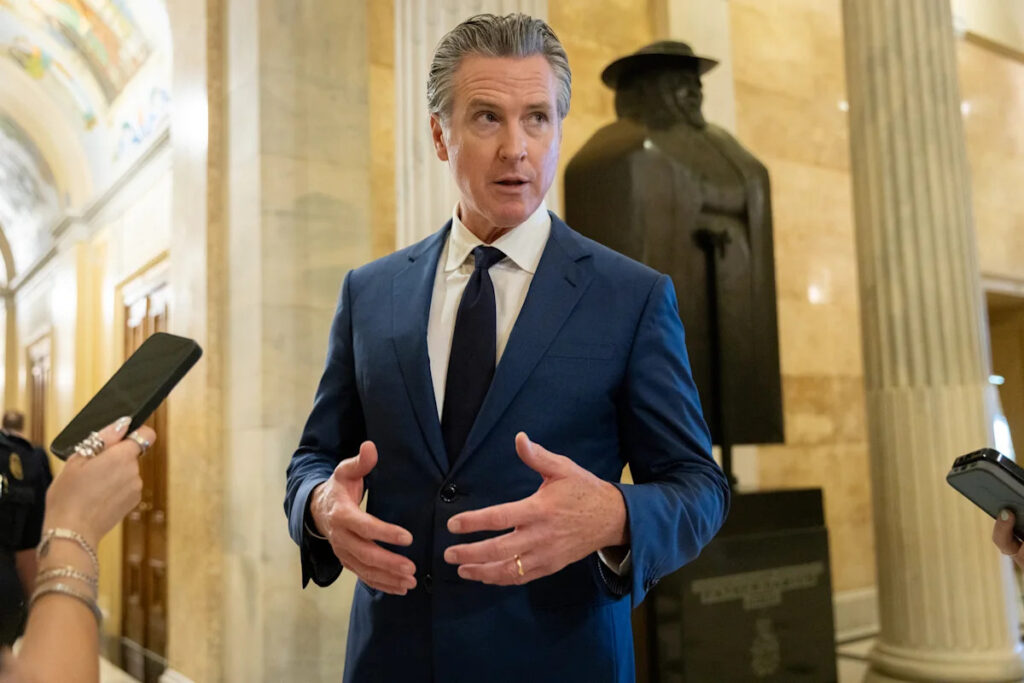
Table of Contents
A New Social Contract for the Algorithmic Age
California Governor Gavin Newsom has signed a sweeping executive order designed to insulate the state’s workforce from the accelerating disruptions of generative AI. The move marks the first time a U.S. state has formally tasked its agencies with redesigning labor policy specifically to counter the displacement risks posed by large language models and automation.
The order isn’t a set of immediate regulations, but rather a mandate for state agencies to collaborate with economists, academic institutions, and industry leaders to build a data-driven framework for the future of work. Newsom’s directive acknowledges a growing anxiety within the Golden State: that the very technology fueling the region’s economic dominance in Silicon Valley may eventually hollow out its middle-class employment base.
“California has never sat back and watched as the future happened to us – and we won’t start now,” Newsom stated in a press release. He argued that the scale of the current shift demands a complete reimagining of how the state governs labor and prepares its citizens for a volatile job market.
Beyond Retraining: The ‘AI Playbook’
While typical government responses to automation focus on basic retraining, Newsom’s order pushes for more structural interventions. The Governor has called for the creation of an “AI playbook” intended to modernize job training programs in real-time, moving away from static certifications toward more agile, skill-based learning.
More provocatively, the order directs agencies to explore mechanisms for workers to share in the wealth generated by AI-driven productivity gains. This suggests a willingness to look beyond traditional wages toward models that could include profit-sharing or state-managed funds—a nod to the broader global debate around Universal Basic Income (UBI) and automation taxes.
The executive order also mandates a critical review of:
- Severance Standards: Reevaluating the financial safety nets for workers displaced by AI.
- Early Warning Systems: Developing signals to identify sectors at imminent risk of collapse before mass layoffs occur.
- Subsidized Employment: Exploring state-funded roles to bridge the gap between displaced corporate jobs and new emerging industries.
The Timing of the Pivot
The policy shift comes as the tech sector undergoes a brutal correction. Just this week, Meta announced layoffs affecting roughly 8,000 employees—approximately 10% of its workforce. This follows a pattern of aggressive headcount reductions at Amazon, Oracle, and Cloudflare, where AI efficiency is often cited as a justification for leaner operations.
The risk is no longer confined to entry-level coding or data entry. Dario Amodei, co-founder of Anthropic, has previously suggested that up to half of white-collar roles could be eliminated within five years. For California, where the concentration of high-paying professional services is highest, this represents a systemic economic threat.
Federal Friction and Regulatory Conflict
This move sets California on a potential collision course with Washington. While Newsom is doubling down on state-level oversight, the Trump administration has consistently advocated for a laissez-faire approach to AI development, emphasizing American competitiveness and the removal of regulatory hurdles.
This isn’t Newsom’s first foray into AI governance; in March, he signed an order focused on public safety regulations for AI firms contracting with the state. However, moving into the realm of labor economics—traditionally a mix of federal and state jurisdiction—could trigger legal challenges if California’s proposed policies conflict with federal deregulation efforts.
As the state begins gathering data to inform these new policies, the immediate question remains whether these measures can scale fast enough to keep pace with the deployment of agentic AI, which threatens to automate complex workflows far quicker than the state can rewrite its labor codes.


