NASA Shifts Lunar Strategy: Blue Origin, Astrolab, and Lunar Outpost Secure First Moon Base Contracts
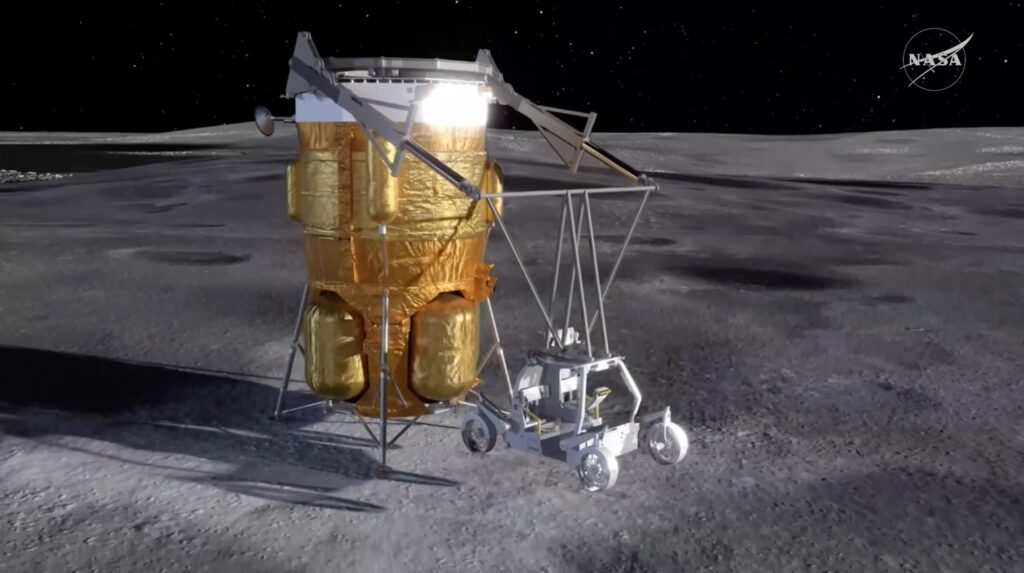
Table of Contents
A Pivot Toward Pragmatism
NASA has officially pivoted its strategy for the lunar surface, awarding the first set of contracts aimed at establishing a permanent presence on the Moon. In a series of announcements from NASA Headquarters, the agency selected four key industry partners to develop the transport and exploration hardware necessary to support the upcoming Artemis missions. The move signals a shift toward simpler, more cost-effective designs that can be deployed rapidly, moving away from the more ambitious but expensive concepts previously proposed under the Lunar Terrain Vehicle (LTV) program.
The core of this new approach involves a coordinated effort between rover developers and delivery systems. NASA has selected Astrolab and Lunar Outpost to build the rovers, while Blue Origin will provide the delivery mechanism via its Blue Moon Mark 1 robotic landers. The goal is aggressive: have these assets operational on the lunar surface before the Artemis 4 crewed landing, currently targeted for 2028.
The New Rovers: Form Following Function
The selected rovers are not the sprawling, high-complexity machines NASA initially sought. Following the ‘Ignition’ event in March, the agency requested revised designs that prioritize speed of delivery and operational efficiency. Carlos Garcia-Galan, program manager for Moon Base at NASA, described the new fleet as a hybrid between the iconic Apollo Lunar Roving Vehicle and a modern Mars-style autonomous rover.
Astrolab will develop the Crewed Lunar Vehicle 1 (CLV-1), a scaled-down version of its FLEX architecture. The contract is valued at $219 million. According to CEO Jaret Matthews, the CLV-1 leverages years of existing testing to ensure it can withstand the lunar environment while meeting NASA’s new mass and volume constraints.
Meanwhile, Lunar Outpost—which recently secured $30 million in funding—will deploy Pegasus. Drawing inspiration from the Apollo-era rovers, Pegasus is designed for the high-reliability range needed to scout potential permanent outpost sites. NASA has awarded Lunar Outpost $220 million for the project.
The Logistics Puzzle: Blue Origin and CLPS
In a significant departure from the original LTV program, NASA is no longer requiring rover developers to secure their own transportation. Instead, the agency is utilizing the Commercial Lunar Payload Services (CLPS) framework to streamline logistics. This means rovers must now fit within a strict one-metric-ton mass limit to accommodate the landers.
Blue Origin’s Blue Moon Mark 1 lander has been selected as the primary ferry for these rovers. The financial commitment starts with a $188 million base period for mission design and hardware procurement, with additional options worth $280.4 million to cover the actual landing missions. This deployment follows a tight schedule: a Blue Moon Mark 1 mission this fall, followed by a 2027 mission carrying the VIPER rover to scout for lunar volatiles.
The ‘MoonFall’ Scouting Mission
Beyond rovers, NASA is introducing a new layer of reconnaissance through the MoonFall program. This initiative focuses on drone-like spacecraft capable of “hopping” across the lunar surface to provide high-resolution ground truth data on lighting and terrain, particularly at the lunar South Pole.
Firefly Aerospace has been tapped to deliver these drones using the Elytra Dark spacecraft. The drones will be deployed from lunar orbit at an altitude of 50 kilometers, descending independently to perform scouting missions. While NASA is still deciding whether the 2028 launch will carry three or four drones, Firefly has already received a $75 million subcontract from the Jet Propulsion Laboratory (JPL) to execute the mission.
Market Volatility and the Intuitive Machines Omission
The announcement was not without casualties. Intuitive Machines, a heavy hitter in the LTV program and a previous successful lunar lander operator, was notably absent from the award list. The market reacted sharply; the company’s share price, which had climbed nearly 20% in anticipation of the news, plummeted by roughly 9% to close at $34.86.
Steve Altemus, CEO of Intuitive Machines, attempted to frame the omission as a timing issue rather than a failure, suggesting that the company remains eligible for future task orders as the Moon Base buildout expands. However, the immediate loss of a primary LTV contract highlights the fierce competition and the agency’s willingness to shift partners to meet specific budgetary and timeline constraints.


