The Daughter of the Revolution: Alina Fernández on the Perils of Underestimating the Cuban Regime
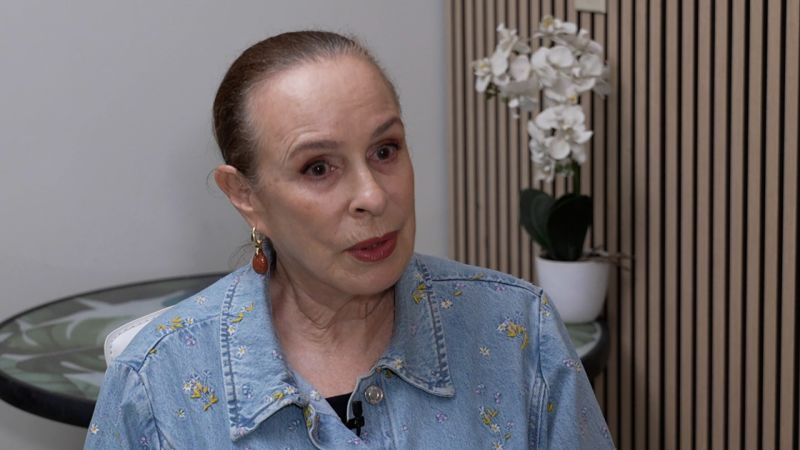
Table of Contents
A Life in the Shadow of the Commandante
For most Cubans of her generation, the image of Fidel Castro is inseparable from the drone of interminable televised speeches. For Alina Fernández, those speeches were the backdrop of a childhood spent praying for the broadcast to end so she could watch cartoons. But while the public saw a revolutionary leader, Fernández saw a man who made nocturnal visits to her mother’s home in Havana—a man she would eventually learn was her father.
Now living in exile in Miami, Fernández occupies a singular space in the geopolitical narrative of the Caribbean. As a longtime anti-communist and a critic of the regime her father built, she finds herself at a crossroads where personal history meets current US foreign policy. With the Trump administration signaling a more aggressive posture toward Havana, Fernández is issuing a stark warning: do not mistake the regime’s fragility for weakness.
The Mechanics of Survival and State Violence
The rhetoric coming from Washington often suggests that the Cuban government is a house of cards waiting for the right gust of wind to collapse. However, Fernández argues that this perspective ignores the ingrained survival instincts of the Cuban state. In a recent interview with CNN, she noted that the state of ‘impending invasion’ has been a baseline for Cuban governance for nearly seven decades.
“This is not the first time Cubans have been told that an invasion is coming immediately,” Fernández stated. She suggests that the government is not only prepared for such an event but is likely to use its civilian population as a shield. This echoes the warnings of Cuban President Miguel Díaz-Canel, who has characterized any potential US military intervention as a precursor to a “bloodbath.”
Fernández believes the tragedy of a forced regime change would be the human cost. She posits that the regime’s tendency to place civilians on the front lines of political violence means that any victory for the US would be marred by immense suffering. For Fernández, the prospect of liberation is tempered by the knowledge of how these systems actually operate on the ground.
Exile and the Psychology of Betrayal
Fernández’s break from her father’s legacy was not immediate, but it was absolute. By the late 1980s, the disparity between the revolutionary glory promised in speeches and the stark reality of Cuban life became untenable. In 1993, she fled to the United States, driven by a desire to protect her daughter from the same state surveillance and ideological pressures she had endured.
Her transition to Miami was an exercise in irony. In a city defined by its fervent anti-Castro sentiment, she found the only place where she felt truly comfortable. Despite her lineage, she identifies not as the daughter of a dictator, but as a victim of the system he created. “I feel like every other Cuban,” she noted, describing herself as a woman and an exile first.
The Rubio Factor and Strategic Signaling
Analyzing the current shift in US policy, Fernández points to a specific catalyst: the influence of Cuban-Americans within the US executive branch. She argues that the current bellicose tone is less a reflection of Donald Trump’s personal strategy and more a result of the influence of figures like Secretary of State Marco Rubio.
She further suggests that recent legal maneuvers, including the criminal indictment of her uncle, Raúl Castro, are likely symbolic rather than substantive. Given that Raúl is nearly 95 years old, Fernández views these actions as “fig leaves”—strategic signals designed to pave the way for broader US actions against the government rather than genuine attempts at judicial accountability.
While the US may believe that increased pressure will cause the regime to fold, Fernández maintains that the psychological hold of a failed war is powerful. She believes the regime lost its war against imperialism long ago, but warns that the act of admitting defeat is rarely a peaceful process.


