The Architecture of Movement: Why ‘On Trails’ is More Than a Hiking Memoir
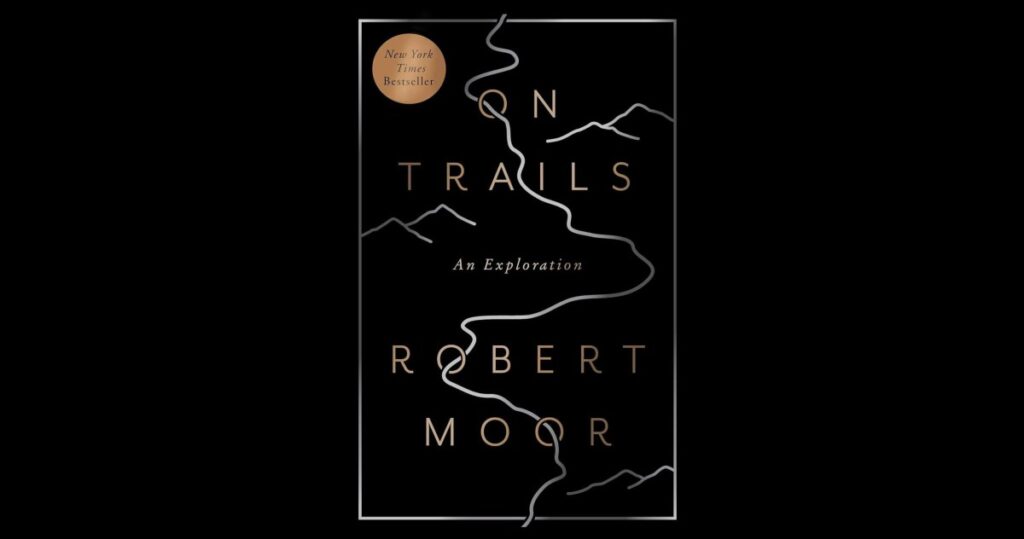
Table of Contents
Beyond the Backpack
For those who view hiking as a mere escape from the digital grind, the traditional travelogue often follows a predictable arc: a quest for solitude, a series of physical hardships, and an eventual spiritual awakening. When Robert Moor began documenting his journey on the Appalachian Trail in On Trails: An Exploration, it seemed he was adhering to this familiar script. However, the book quickly evolves from a personal memoir into a sophisticated meditation on how pathways—both biological and synthetic—shape our existence.
The narrative starts grounded in the wilderness of Newfoundland, specifically around Western Brook Pond, where Moor grapples with the raw, often terrifying reality of nature. He describes a storm pinning him to a ridge, a moment where the romanticized version of the outdoors vanishes, replaced by a stark realization of human fragility. It is a visceral opening that sets the stage for a broader inquiry: why are we drawn to paths, and what happens when those paths dictate our behavior?
The Invisible Grid
What distinguishes On Trails from contemporary outdoor literature is Moor’s willingness to pivot from the dirt under his boots to the data in the air. The book treats the concept of a ‘trail’ as a universal architecture. He seamlessly bridges the gap between the pheromone-led highways of ant colonies and the subterranean sprawl of fiber optic cables that power the modern internet.
This intersection of nature and technology is where the book finds its intellectual heartbeat. Moor explores the work of Vannevar Bush, the 1945 engineer who envisioned a proto-internet through his ‘Memex’ concept. By linking the physical act of trail-blazing with the cognitive act of information retrieval, Moor suggests that our digital interfaces are essentially virtual trails—curated paths designed to lead us toward specific conclusions or destinations.
The prose moves with a restless, inquisitive energy. One chapter may focus on the linguistic nuances of movement in the English language, while the next delves into the colonial implications of marking land. Moor doesn’t just describe the landscape; he analyzes the infrastructure of the world, whether that infrastructure is a game trail carved by deer or the rigid grid of a planned city.
A Study in Connectivity
There is a certain irony in reading a book about disconnecting from technology that spends so much time analyzing the technology of connection. Yet, this is precisely why the work resonates. By examining the parallels between a shepherd’s route and a network protocol, Moor highlights a fundamental human drive: the need to map the unknown and create reliable conduits for movement.
The book is a masterclass in tonal shifting. Moor can move from a poetic description of the wilderness to a self-deprecating anecdote about losing a flock of sheep without losing the reader. This versatility allows him to tackle heavy subjects—such as the destructive legacy of colonialism—without the narrative feeling like a lecture. Instead, these reflections emerge naturally as he considers how the ‘trails’ we leave behind often overwrite the histories of those who came before us.
Ultimately, On Trails is less about the destination of a specific hike and more about the mechanics of navigation. It challenges the reader to see the world not as a collection of static places, but as a dynamic web of intersecting lines. Whether those lines are made of soil, silicon, or social convention, they all serve the same purpose: guiding us through the chaos of the environment.