Deep Fission’s Quest for a Nasdaq Listing Comes With Some Serious Red Flags
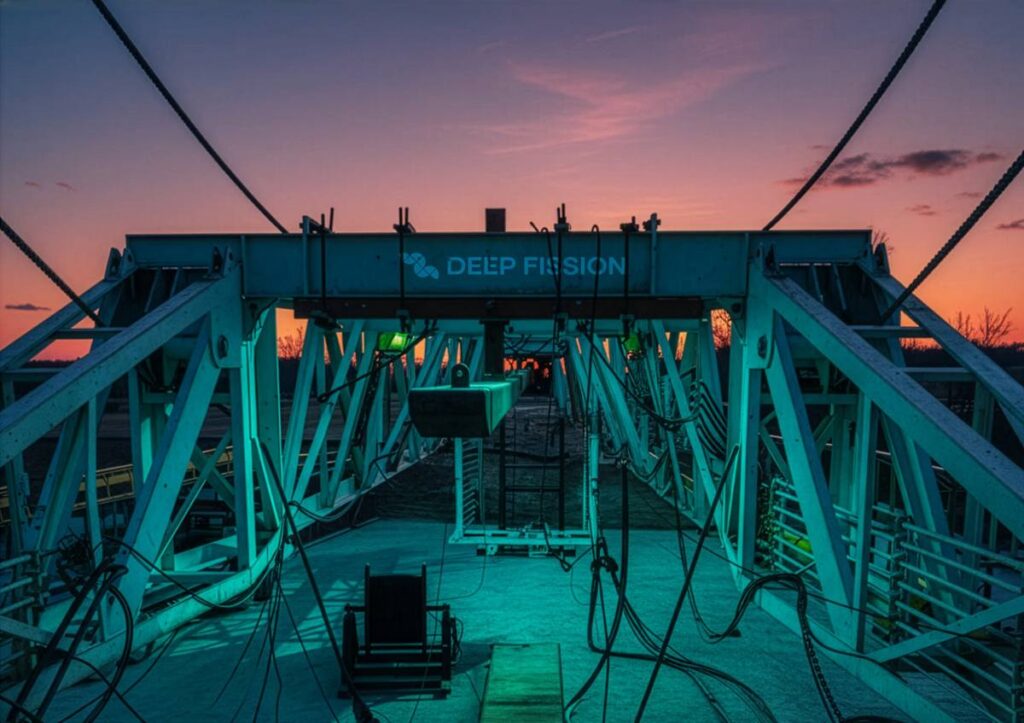
Table of Contents
A Confusing Path to the Public Market
For anyone tracking the intersection of nuclear energy and AI infrastructure, the recent news coming out of Deep Fission feels like a glitch in the matrix. The startup, which aims to build subterranean nuclear reactors to feed the insatiable power demands of AI data centers, has announced it is going public. The problem is that, according to its own previous claims, it had already done that.
Last September, Deep Fission announced a reverse merger with Surfside Acquisition, a Delaware shell company. In the world of corporate finance, this is a common shortcut to gain a stock market listing without the rigmarole of a traditional IPO. At the time, the company claimed to have raised $30 million in a private placement at $3 a share. However, a closer look reveals that this “public” status was largely a formality. While the merger made Deep Fission a reporting company with SEC obligations, the stock never actually traded. Despite intentions to list on the OTCQB, searches for the company return nothing, and its own S-1 filing recently admitted the stock had never been publicly traded.
Deep Fission is now attempting a more conventional route: a Nasdaq IPO seeking $157 million, with shares priced between $24 and $26. If successful, the move would value the company at up to $1.66 billion—a staggering leap for a firm that was struggling to close a modest $15 million funding round just a year ago.
Financial Stability and the ‘Going Concern’ Warning
While the valuation is climbing, the underlying fundamentals appear to be slipping. In a new S-1 filing dated May 20, the company’s financial health looks noticeably bleaker than it did in December. Most concerning is the persistence of a “going concern” warning. In SEC parlance, this is a red flag indicating that a company may not have the resources to survive another 12 months if the current IPO fails to materialize.
The numbers back up the anxiety. By March, Deep Fission’s deficit had ballooned to $88.1 million, up from $56.2 million in late 2023. The company’s cash reserves are also dwindling; in just six weeks, its cash and cash equivalents dropped by approximately $6.4 million, a 7% decline that underscores the urgency of this capital raise.
The Engineering Gap
Beyond the balance sheet, there are significant technical hurdles. Deep Fission’s core pitch relies on drilling deep boreholes to house nuclear reactors. However, the company’s timeline for achieving “criticality”—the point where a nuclear chain reaction becomes self-sustaining—has become vague. While it previously targeted July 2026, it is now refusing to provide a specific estimate.
Current operations are limited to drilling test wells. The company began drilling its first of three test wells in March, reaching depths of up to 6,000 feet. But there is a massive gap between a test well and a commercial reactor. These test holes are only eight inches in diameter. For a commercial-scale operation, Deep Fission estimates it will need boreholes between 30 and 50 inches in diameter. To put that in perspective, that is significantly larger than the standard boreholes used in the oil and gas industry.
Until the company can prove it can drill a hole of that magnitude at a depth of one mile, the actual design of the reactor remains theoretical. The technical risk is high, and the path to regulatory approval from the Nuclear Regulatory Commission (NRC) is notoriously slow and grueling.
Riding the AI Energy Wave
If the financials are shaky and the engineering is unproven, why the push for a billion-dollar valuation? The answer likely lies in the current market euphoria surrounding AI. Big Tech’s desperate search for carbon-free, 24/7 baseload power has turned nuclear energy into a hot asset. Deep Fission recently secured an $80 million equity investment, including $20 million from data center developer Blue Owl, which also signed a non-binding memorandum of understanding for future plants.
This trend has benefited other players, such as X-energy, which recently went public in an upsized IPO. However, the contrast is stark: X-energy is already generating revenue and is much further along in the NRC licensing process. Deep Fission appears to be attempting to capture the same investor enthusiasm without having the same level of technical or commercial maturity. For now, the company has declined to comment on these discrepancies, citing the mandatory “quiet period” preceding an IPO.


