The Allure of the Distraction-Free Slate: Inside the WriterDeck Linux Experiment
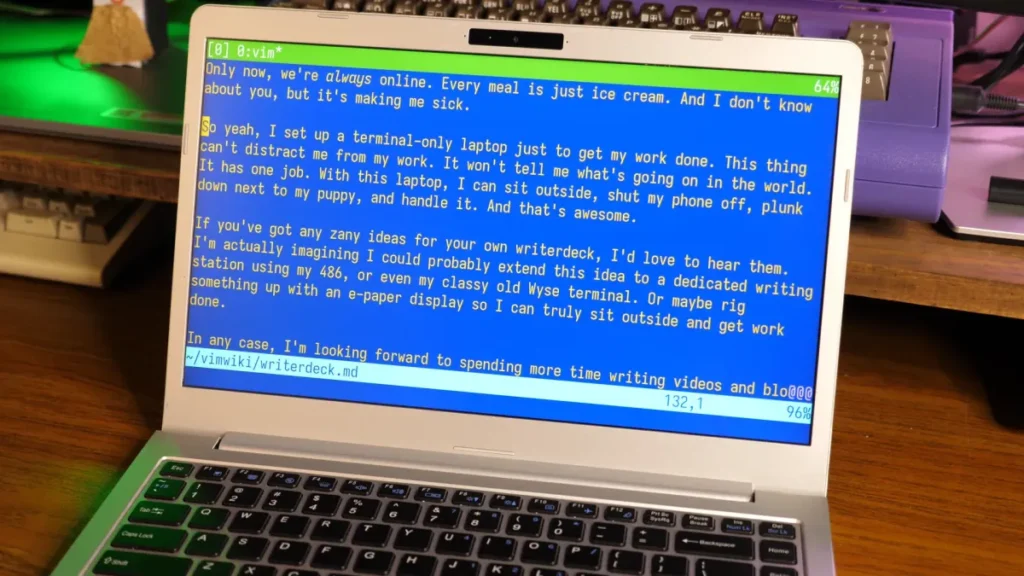
Table of Contents
The Return to Minimalism
In an era of infinite scrolls and notification pings, a growing subculture of writers and developers is retreating toward the digital equivalent of a typewriter. The latest manifestation of this trend is the WriterDeck, a project that blends a minimalist hardware footprint with the raw power of a Linux backend, designed specifically to strip away the noise of modern operating systems.
The device isn’t trying to compete with the iPad or the MacBook. Instead, it occupies a niche space for those who find the versatility of a full computer to be a liability. By focusing on a singular purpose—text entry—the WriterDeck aims to solve the ‘productivity paradox,’ where the tools meant to help us work more efficiently often become the primary source of procrastination.
Linux and the Power of Vim
At its core, the WriterDeck leverages Linux, providing a stable, open-source foundation that allows for deep customization. For a specific breed of power user, the inclusion of Vim—the legendary, keyboard-driven text editor—is the primary draw. Vim allows writers to navigate, edit, and manipulate text without ever lifting their hands from the home row, creating a flow state that is nearly impossible to achieve in a mouse-driven environment like Google Docs or Microsoft Word.
This marriage of hardware and software transforms the act of writing into a tactile experience. Because the system is stripped of a traditional desktop environment, there are no browser tabs to wander into and no social media alerts to derail a train of thought. The interface is stark, functional, and intentionally limiting.
The Hardware Philosophy
While the software provides the utility, the hardware provides the boundary. The WriterDeck’s design reflects a desire for physical intentionality. By utilizing an e-ink or high-contrast display and a dedicated physical keyboard, it separates the ‘writing space’ from the ‘consumption space.’
Many users in the community, including those documenting their setups via platforms like veronicaexplains.net, emphasize that the goal is not necessarily to increase word count, but to increase the quality of focus. The friction of booting up a dedicated device creates a psychological trigger, signaling to the brain that it is time to produce, not consume.
A Growing Ecosystem of ‘Slow Tech’
The WriterDeck isn’t an isolated phenomenon. It sits alongside a broader movement of ‘slow tech’ gadgets, including the Freewrite Traveler and the Boox series. However, the Linux-based approach offers a level of transparency and modability that proprietary devices lack. Users can script their own shortcuts, manage their files via a terminal, and ensure that their data remains under their own control rather than locked in a corporate cloud.
This openness attracts a crowd that values digital sovereignty. The ability to tinker with the kernel or customize the shell means the device can evolve with the user’s specific workflow, whether they are drafting a novel, coding in a lightweight environment, or keeping a digital journal.
The Trade-off of Intentionality
Of course, the move toward such a restrictive device comes with significant trade-offs. There is no spell-check in the traditional sense, no easy way to quickly look up a fact on Wikipedia, and no seamless integration with a wider suite of productivity apps. For most, these would be deal-breakers.
But for the target audience, these limitations are the primary feature. The inability to multitask is not a bug; it is the product. By removing the safety net of a modern OS, the WriterDeck forces the author to rely on their own memory and structure, mimicking the disciplined environment of a physical notebook or a manual typewriter.


