Musk’s Orbital Ambitions: SpaceX Filings Reveal a Pivot From Terrestrial Solar to Space-Based Power
Table of Contents
The Divergence of the Master Plan
For years, the central thesis of Elon Musk’s industrial empire was the transition toward a solar-electric economy. Tesla’s various ‘Master Plans’ weren’t just business strategies; they were manifestos for the electrification of everything, aimed at dismantling the hydrocarbon-based energy grid. However, recent regulatory filings from SpaceX suggest a quiet but significant pivot in how Musk views the future of energy—specifically for the insatiable power demands of artificial intelligence.
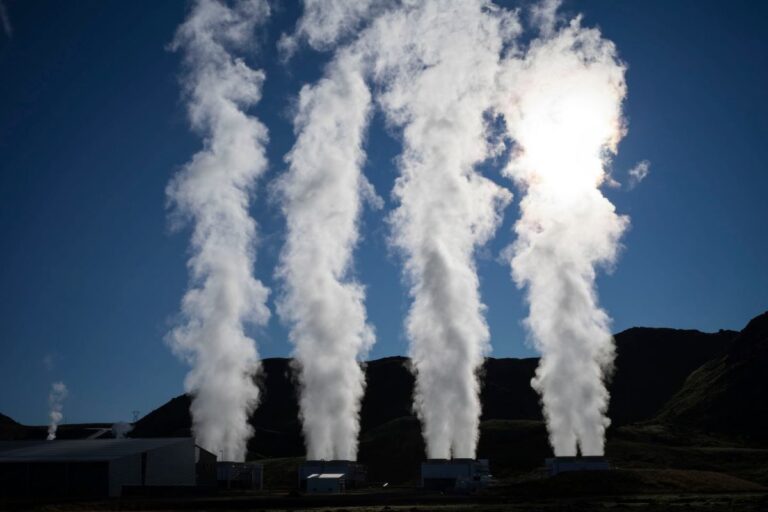
While Tesla continues to market solar panels and grid-scale storage to the public, Musk’s newest venture, xAI, appears to be operating under a different set of rules. Rather than relying on terrestrial solar arrays, xAI has leaned heavily into the ‘mine-and-burn’ economy. The company has deployed dozens of natural gas turbines to keep its data centers online, with plans to invest an additional $2.8 billion into fossil-fuel-based power infrastructure.
This creates a striking paradox. Musk frequently directs his companies to synergize—SpaceX has purchased over 1,200 Cybertrucks and xAI has spent nearly $700 million on Tesla Megapacks for load management. Yet, there is a conspicuous absence of Tesla solar installations at xAI’s primary compute sites.
The Case for Orbital Energy
The missing link isn’t found on the ground, but in orbit. In recent SpaceX filings, terrestrial solar is mentioned not as a viable solution, but as a baseline to be surpassed. The documents champion space-based solar arrays, which SpaceX claims can generate more than five times the energy of Earth-bound systems due to constant, 24/7 illumination without atmospheric interference.
For Musk, the problem is no longer just about carbon footprints, but about scale and speed. The filings reference ‘terawatt-scale annual AI compute growth.’ To put that in perspective, the world’s existing data centers consume roughly 40 gigawatts. Moving the power source—and potentially the servers themselves—into space would solve two problems at once: the physical shortage of land and the increasing regulatory and social opposition (NIMBYism) to massive industrial power plants on Earth.
The Engineering Hurdle
While the vision is grand, the technical and economic reality remains fraught. Powering Starlink satellites is already exponentially more expensive than powering a terrestrial server farm. Beyond the cost of launch, the hardware must be ruggedized against the extreme vacuum and radiation of space, and the latency involved in distributing AI training across an orbital constellation remains an unsolved challenge.
There is also the matter of logistics. The energy required to launch the massive amount of hardware needed to achieve terawatt-scale power in orbit is staggering. In a sense, the ‘first principles’ approach Musk is applying here assumes that the cost of launch will drop so precipitously that shipping solar panels into the thermosphere becomes cheaper than trucking them across a state line.
A Bridge to Nowhere?
It appears Musk views the current natural gas turbines at xAI as temporary stopgaps. The strategy seems to be: burn gas now to achieve AI dominance, then migrate the entire compute infrastructure to the stars once SpaceX’s launch capacity permits.
However, this pivot stands in direct contrast to Tesla’s ‘Master Plan Part 3,’ released only a few years ago, which explicitly outlined a path to eliminate fossil fuels. By utilizing natural gas to fuel the AI race, Musk is essentially betting that the future is orbital, even if it means abandoning the terrestrial clean-energy transition in the short term. The risk is that if the economics of space-based power fail to materialize, the ‘bridge’ of natural gas turbines becomes a permanent fixture of the AI era.