The Forgotten Element: Why Web Developers Are Rediscovering the Semantic Power of the Description List
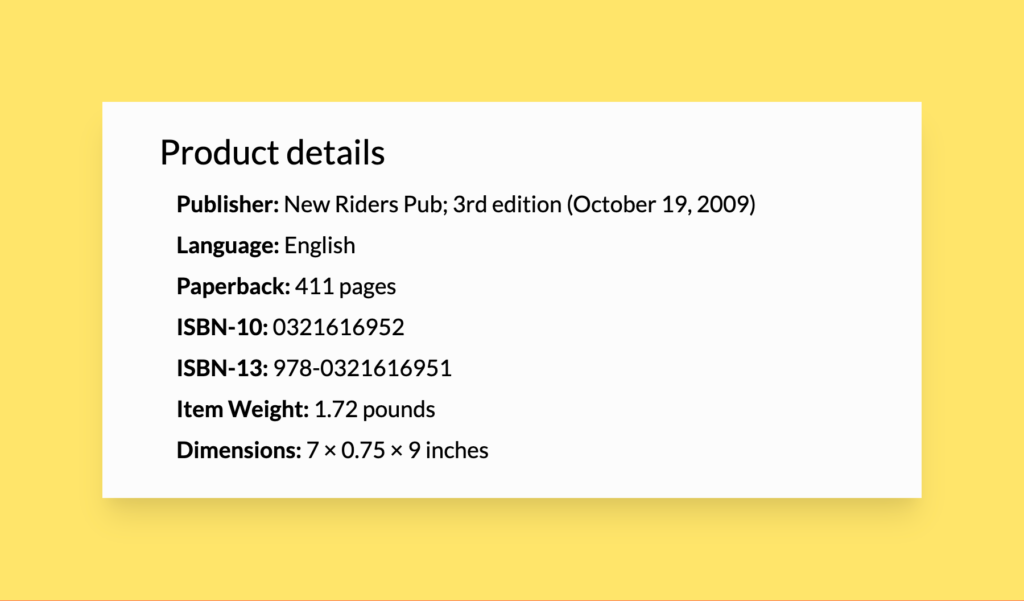
Table of Contents
Beyond the Div: The Case for Semantic Precision
For years, the modern web has been built on a foundation of nested <div> elements. To the naked eye, a series of nested boxes can create any layout imaginable—from a simple product specification table to a complex user profile. However, for the millions of users relying on assistive technology, these visually structured layouts are often invisible, rendering a list of name-value pairs as a disjointed string of text nodes.
This is where the <dl>, or description list, comes into play. Long overlooked or relegated to the niche use-case of online glossaries, the description list is proving to be one of the most versatile tools in a front-end developer’s arsenal for creating truly accessible interfaces.
Deconstructing the Description List
Unlike an unordered list (<ul>) or an ordered list (<ol>), the description list is designed specifically for groups of terms and their corresponding values. It operates as a triad of elements: the <dl> wrapper, the <dt> (description term), and the <dd> (description detail).
The flexibility of this structure allows for a variety of real-world applications. While a standard implementation pairs one term with one detail, the HTML specification allows for one-to-many relationships. For instance, a single book title (the term) could be followed by multiple authors (the details), maintaining a logical programmatic link between the entity and its attributes.
Modern CSS has also removed the historical styling limitations that once made developers shy away from the <dl>. The current spec allows developers to wrap <dt> and <dd> pairs within a <div> inside the list, enabling complex grid or flexbox layouts without breaking the semantic integrity of the document.
The Accessibility Gap
The pivot from generic containers to semantic elements isn’t just about “clean code”; it is a matter of accessibility (a11y). When a developer uses nested divs to represent a data pair, a screen reader simply reads the text in sequence. The user has no way of knowing that the first piece of text is a label and the second is the value.
By using the <dl> element, browsers can communicate the structure of the data to assistive technologies. This enables screen reader users to:
- Quickly navigate between terms.
- Understand the total number of items in a list before diving in.
- Gain context on how a specific value relates to its label.
While support for the <dl> element isn’t entirely universal across every legacy browser and screen reader combination, the fallback experience is generally a return to standalone text nodes—meaning there is virtually no risk in implementing it, only a significant potential reward for the user.
Real-World Application: From E-Commerce to Gaming
The versatility of the description list is most apparent when applied to data-heavy interfaces. Consider an e-commerce site listing lodging amenities: “WiFi: Free,” “Parking: Paid,” and “Breakfast: Included.” Each of these is a textbook candidate for a <dl>.
Even more complex structures, such as Dungeons & Dragons stat blocks, benefit from this approach. A typical monster stat block contains multiple distinct sets of name-value pairs: ability scores (Strength, Dexterity, etc.), armor class, and specific attack modifiers. By marking these up as separate description lists, developers transform a wall of text into a structured database that a computer can recognize and a human with visual impairments can navigate efficiently.
As the web moves toward a more inclusive future, the shift away from “div-soup” and toward semantic HTML is no longer optional. The description list serves as a reminder that the most effective tools for the modern web are often the ones that have been hiding in plain sight since the early days of the internet.


