The Glorious Mess of Planescape: Torment and the Legacy of the D&D Multiverse
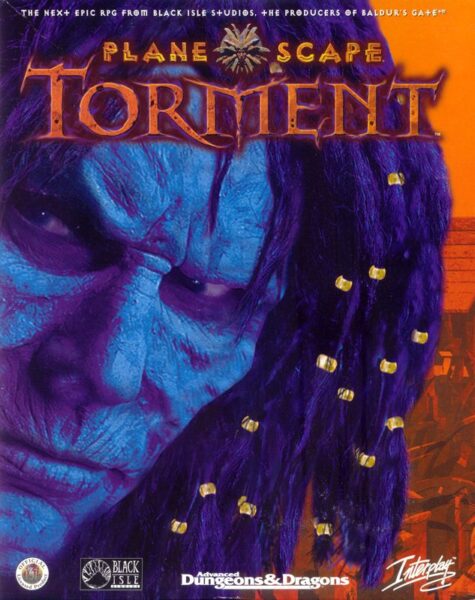
Table of Contents
The Paradox of the ‘Hot Mess’
By the late 1990s, Interplay had established a distinct identity for its internally developed computer role-playing games (CRPGs) under the Black Isle Studios banner. While the distinction was largely cosmetic—sharing the same office space and personnel as its parent publisher—it signaled an era of ambitious, often undisciplined experimentation in game design. Nowhere was this more evident than in 1999 with the release of Planescape: Torment.
To look at Planescape: Torment through a modern technical lens is to see a project riddled with friction. The pacing is glacial, the interface is clunky, and the combat system often feels like an afterthought, serving as a tedious interruption to the game’s primary driver: its writing. With a reported 800,000 words of dialogue, the game is a behemoth of text that occasionally betrays its age, with some of its more ‘profound’ philosophical musings feeling like the products of twenty-something writers attempting to solve the universe from a California office.
And yet, these failures are precisely why the game remains a cornerstone of digital storytelling. While most RPGs of the era focused on the power fantasy—the linear ascent from a weakling to a demigod—Torment dared to be an interactive tragedy. It replaced the triumph of the blade with the triumph of the conversation, proving that a player character could be just as formidable with a well-placed argument as they were with a weapon.
Rooted in the Heartland
Despite the prestige associated with Black Isle Studios, Planescape: Torment was not a vacuum-sealed creation of Southern California software engineers. It was a licensed adaptation of the Dungeons & Dragons universe, emerging during a volatile period of corporate transition as TSR collapsed and was eventually acquired by Wizards of the Coast.
The game’s depth was not invented by Interplay; it was inherited. The surreal, metaphysical foundation of the game was built upon the creative work done at TSR’s Wisconsin headquarters. The ‘planes’ that provide the game’s haunting backdrop were not mere set dressing but a direct translation of the planar cosmology introduced by Gary Gygax in the late 1970s.
Gygax’s original vision for the multiverse was a chaotic, inclusive melange. He drew from quantum physics, Renaissance alchemy, religious texts, and the works of Dante and Milton to create a system where the ‘Prime Material Plane’ sat at the center, surrounded by Inner Planes of physical elements and Outer Planes of metaphysical alignment. This layout allowed for a level of creative freedom that was virtually unprecedented in tabletop gaming at the time.
The Architecture of Infinite Possibility
For Gygax and the early designers at TSR, the planes were more than just locations; they were a toolkit for total environmental divergence. In this framework, scale, combat, and even the basic laws of morality could shift depending on the plane the characters occupied. As long as the players had a tether to the reality, the world could be as alien as the designers imagined.
This philosophy of ‘Creativity with a capital C’ is what allowed Planescape: Torment to move beyond the tropes of the fantasy genre. By leveraging a setting where belief could literally reshape reality, the developers were able to create a narrative that focused on identity and regret rather than gold and experience points.
While the original Planescape campaign setting was a modest seller during its initial run—priced at a modest $30—its influence grew exponentially in the decades that followed. Today, those original materials are prized collectors’ items, often fetching $250 or more, serving as a physical reminder of the era when the boundaries between tabletop imagination and digital execution were first being pushed to their breaking point.