The Asus ROG Zephyrus G14 is the Perfect Laptop That No One Can Afford
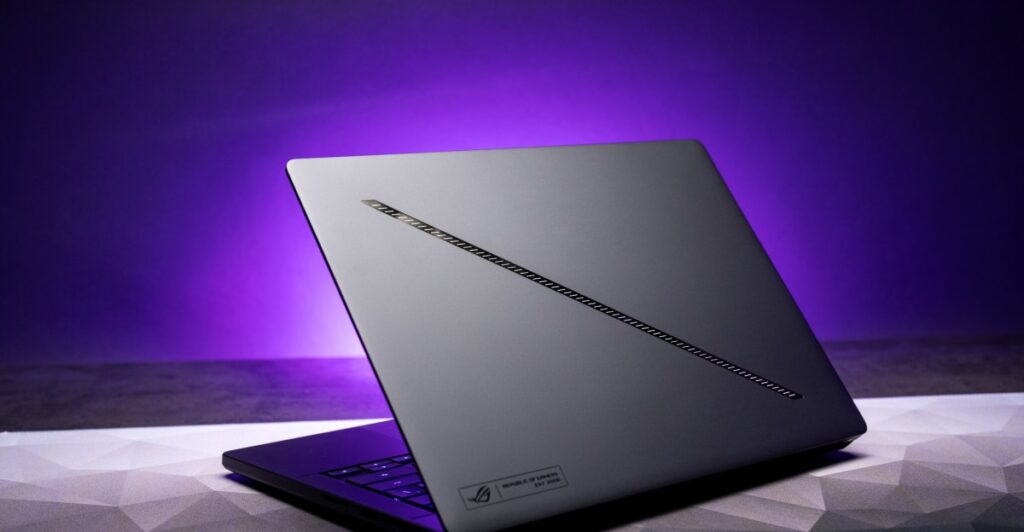
Table of Contents
A decade of dominance meets a pricing crisis
For years, the Asus ROG Zephyrus G14 has occupied a rare space in the laptop market: the one-device solution for people who actually do work during the day and play AAA titles at night. Since its debut in 2020, the G14 has evolved through several iterations of chip bumps and chassis redesigns, consistently proving that you don’t need a five-pound plastic brick to get serious gaming performance.
The 2026 edition continues this trajectory of hardware excellence, but it arrives with a sticker shock that is difficult to ignore. Our review configuration—equipped with 32GB of RAM—comes in at $3,599.99. To put that in perspective, the G14 once started in the low $1,000 range. We are now seeing a reality where a 14-inch gaming machine costs as much as a high-end professional workstation and a mid-range gaming desktop combined.
The shift to Panther Lake
The most significant change under the hood is the transition from AMD to Intel’s new Panther Lake architecture. The G14 now sports a 16-core Intel Core Ultra 9 386H, paired with an Nvidia GeForce RTX 5070 Ti. In practice, this means the machine is frighteningly fast. Whether it’s scrubbing through 4K timelines or rendering complex 3D scenes, the G14 handles the load with a level of composure that feels refined.
Crucially, Intel has made strides in power efficiency. Traditionally, Windows laptops suffer a massive performance cliff the moment the power cable is unplugged. Panther Lake narrows that gap significantly. During our testing, culling 50-megapixel RAW photos in Adobe Lightroom Classic felt nearly identical to the experience on a MacBook Pro, with minimal heat generation and a fan profile that doesn’t sound like a jet engine.
Hardware refinements and the ‘SD’ win
Physically, the G14 remains a masterclass in industrial design. It’s thin, light, and maintains a professional aesthetic that doesn’t scream ‘gamer’ in a boardroom. Asus has introduced some subtle cosmetic tweaks, including a more detailed animated slash lighting pattern on the lid and circular venting on the bottom.
For those of us in the creative space, the addition of a full-size SD card slot is a massive victory. Moving away from the microSD slot removes the need for a dongle—a small change that fundamentally alters the daily workflow for photographers.
The display remains a highlight: a 2880 x 1800 120Hz OLED panel. It is noticeably brighter than the 2025 model, hitting 500 nits in SDR and peaking at 1,100 nits in HDR. When paired with the six-speaker array, which provides a surprisingly rich stereo soundstage, the G14 becomes one of the few Windows machines that can actually challenge the MacBook Pro in terms of multimedia consumption.
The value proposition is gone
Despite the technical brilliance, the G14 is currently suffering from what can only be described as ‘RAMageddon.’ A global shortage of memory, spurred by the insatiable demand of AI data centers, has pushed prices upward. However, the price hike here feels more aggressive than market trends alone would suggest. This Intel model is $1,000 more than nearly identical last-gen AMD configurations.
While the new G14 is technically more powerful—reaching a peak TGP of 130W compared to the previous 120W—it often ships with less RAM and storage than last-gen models did at a lower price point. The performance gains are marginal, but the cost increase is monumental.
Asus is still selling older AMD-based models to provide a cheaper entry point, but for those looking at the flagship, the G14 has transitioned from a ‘best-value’ powerhouse to a luxury item. It is, without a doubt, the laptop I would want if I could only own one—provided I had $3,600 to spend on it.


