The $48,000 Gamble: Why One Independent Researcher Built a Private GPU Cluster Instead of Using the Cloud
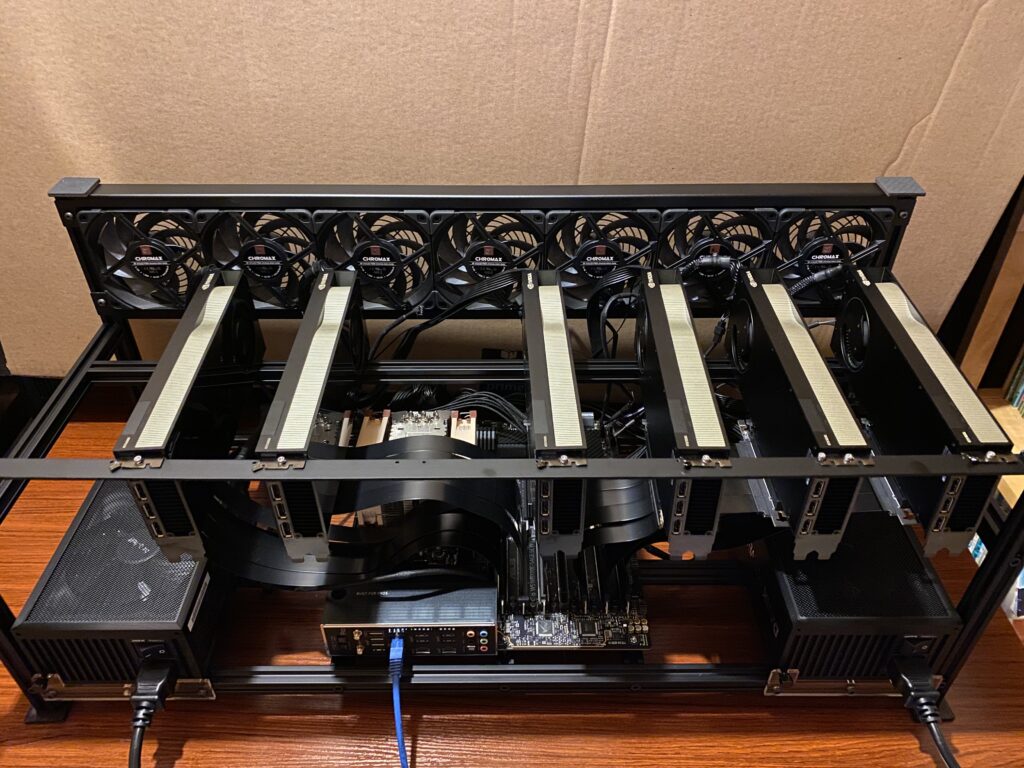
Table of Contents
The High Cost of Independence
For most AI researchers, the dilemma is simple: rent compute from a cloud provider or buy the hardware. For one former FAANG engineer turned independent researcher, that choice involved a $48,000 investment and a precarious electrical setup in a residential apartment. The goal wasn’t just to save money, but to accelerate the development of a breakthrough in Large Language Model (LLM) architecture.
The rig, nicknamed “grumbl,” is a high-density server featuring six NVIDIA RTX 6000 Ada GPUs. While the upfront cost is staggering, the researcher argues that in the high-stakes world of independent AI development, the real cost isn’t the hardware—it’s the lost income and time. In a field where a two-month lead in research can define the success of a project, the ability to run experiments 24/7 without the friction of cloud instance management became a strategic necessity.
Engineering Around Residential Constraints
Building a data-center grade server in a living space presents immediate physical hurdles, primarily power delivery. A six-GPU array exceeds the capacity of a standard residential circuit, creating a genuine risk of tripped breakers or, more catastrophically, electrical fires. To mitigate this, the build utilized two separate power supplies, each plugged into different circuits within the apartment.
To ensure the setup met safety standards, the researcher opted for a professional PC builder rather than a DIY approach. This decision highlighted a critical reality for the “prosumer” AI movement: as hardware becomes more powerful, the gap between a home office and a server room narrows, requiring professional intervention to avoid hazardous conditions.
The Hardware Trade-off: Ada vs. H100
The selection of the RTX 6000 Ada GPUs over the industry-standard A100s or the powerhouse H100s was a calculated move based on price-to-throughput ratios. While the H100 offers unmatched raw power, the 6000 Ada provided the necessary support for FP8 and superior inference performance for Reinforcement Learning (RL) tasks at a more sustainable price point for an individual researcher.
The ROI: Hardware vs. Cloud
To determine if the $48,000 investment was a financial mistake, the researcher implemented a rigorous tracking system, logging GPU utilization and wattage every minute. The analysis compared the actual cost of ownership—including hardware depreciation and electricity—against the on-demand pricing of equivalent cloud compute.
The data revealed a utilization rate of 76% overall, climbing to 85% after January 2025 as projects scaled from development to full-scale experimentation. Despite the high cost of electricity—averaging roughly $125 per month—the financial math eventually tipped in favor of ownership. By March 2026, the equivalent cloud rental fees were estimated at $68,000, resulting in a net saving of $17,000.
Beyond the Balance Sheet
While the numbers show a clear financial win, the researcher notes that the primary driver was the freedom to fail. High-risk, high-reward experiments often result in failure, and the cost of renting GPUs for experiments that lead nowhere can be a significant deterrent to innovation.
The gamble appears to have paid off. Following a period of intense computation and iterative testing, the researcher recently launched a new LLM project that garnered over 400,000 views and attracted interest from multiple companies seeking to license the intellectual property. In the end, the $48,000 server acted as less of a capital expense and more of a catalyst for a commercial breakthrough.


