Tesla’s Solar Roof Dream Fades as Company Pivots Back to Basic Panels
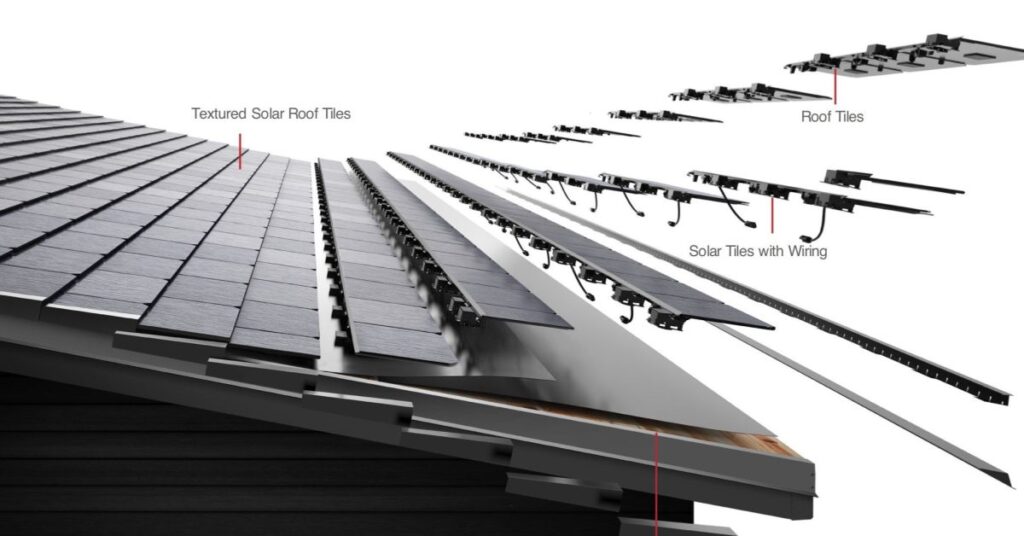
Table of Contents
The Gap Between Promise and Production
In 2016, Elon Musk stood before a crowd and unveiled the Tesla Solar Roof, pitching it not just as a product, but as a fundamental shift in home architecture. The vision was seductive: sleek, glass tiles that were indistinguishable from high-end roofing materials, capable of powering a home in tandem with a Powerwall. Musk set a bold target of 1,000 new installations per week by the end of 2019. Nearly a decade later, the reality is a stark contrast to the presentation.
Industry data suggests a massive shortfall. While Tesla has stopped reporting specific deployment numbers for the product, Wood Mackenzie estimated that the company had installed only about 3,000 Solar Roof systems in the U.S. through early 2023. At its peak in mid-2022, Tesla was deploying roughly 23 roofs per week—a figure that falls nearly 98% short of the original 1,000-per-week goal.
The $2.6 billion acquisition of SolarCity, fueled largely by the promise of this integrated energy ecosystem, now looks like an expensive bet on a product that never found its footing in the mass market.
A Quiet Retreat from the Tiles
The decline of the Solar Roof wasn’t marked by a formal cancellation, but by a slow, systemic erasure. After Q4 2022, Tesla’s total solar deployments began a steady slide. By the first quarter of 2024, the company simply removed the solar deployment line item from its quarterly reports entirely.
The retreat is most visible in the customer experience. Tesla has largely stepped back from direct installations, instead funneling prospective buyers toward a fragmented network of third-party certified installers. In some markets, like Florida, projects have been canceled outright. This shift has created a logistical nightmare for homeowners; when a system fails, a cycle of blame typically ensues between the regional contractor and Tesla’s corporate design team, leaving the customer in a state of perpetual limbo.
This operational collapse was exacerbated by the 2024 company-wide layoffs. The solar division took a significant hit, including the loss of 285 employees at the Buffalo factory. The result has been a cratering of customer support, with forums like Reddit’s r/TeslaSolar and the Tesla Motors Club filled with reports of ghosted appointments and months-long waits for simple repairs.
The Technical and Economic Failure
Beyond the logistics, the Solar Roof suffered from a fundamental design flaw: the use of string inverters. In a string architecture, if one section of the roof is shaded by a chimney or a tree, the energy production for the entire string can plummet. This is a problem that industry leaders like Enphase and SolarEdge solved years ago with micro-inverters and power optimizers—technology Tesla neglected to integrate into the tile system.
The math was equally discouraging. A Tesla Solar Roof often costs upwards of $100,000 before incentives, while a traditional roof combined with standard solar panels typically hovers around $60,000. This $40,000+ premium pushes the payback period into the 15-to-25-year range, rendering the product a luxury aesthetic choice rather than a financial investment.
The Pivot to TSP-420
Tesla’s current strategy is now clearly focused on the pragmatic. During a Q3 2025 earnings call, VP of Energy Engineering Michael Snyder introduced a new residential product: the TSP-420. Tellingly, this is not a new tile, but a conventional solar panel.
Assembled at Gigafactory New York, the TSP-420 incorporates a proprietary 18-zone power optimization system. In a subtle admission of past failure, this new panel addresses the exact shading issues that crippled the Solar Roof. Tesla is now marketing “industry-leading aesthetics,” but they are applying that phrasing to standard panels mounted on existing roofs rather than replacing the roof itself.
The Solar Roof has effectively been moved to the periphery of Tesla Energy. While the Powerwall and Megapack continue to see aggressive promotion and growth, the tiles have vanished from the company’s social media feeds, appearing only as a footnote in historical recap threads. Tesla is no longer trying to reinvent the roof; it is simply trying to sell a better panel.