The Great Skills Swap: How AI is Redefining the Automotive Workforce
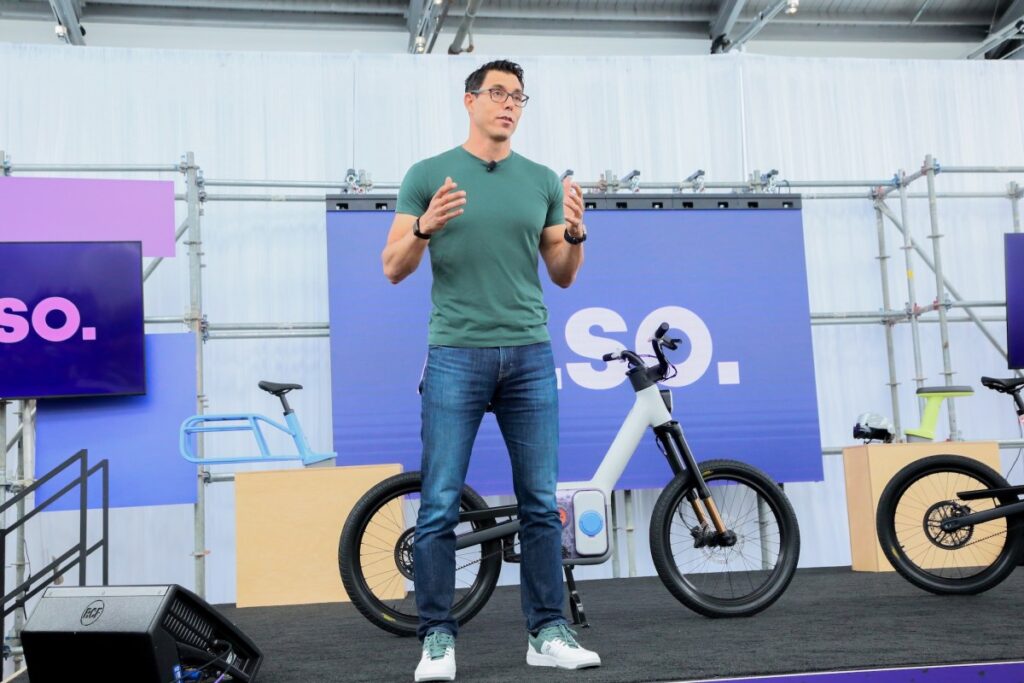
Table of Contents
A Strategic Pivot in Detroit
The automotive industry is currently undergoing a quiet but aggressive transformation of its human capital. While the headline numbers often focus on layoffs, a deeper look at the internal movements within companies like General Motors reveals a deliberate, if painful, “skills swap.”
GM recently reduced its IT department by more than 10%, affecting approximately 600 salaried employees. On the surface, it looks like a standard corporate contraction. In reality, the company is clearing the deck to make room for a different breed of engineer. The goal isn’t necessarily to reduce headcount for the sake of the balance sheet, but to pivot toward AI-native development. GM isn’t looking for IT professionals who can use AI as a productivity tool; they are hunting for architects who can build the systems, train the models, and engineer the data pipelines from the ground up.
This shift is not isolated to one manufacturer. Data suggests a broader trend across the “Big Three.” Ford, GM, and Stellantis have collectively shed over 20,000 U.S. salaried positions since their employment peaks earlier this decade—a nearly 20% reduction in their combined workforces. While macroeconomic pressures play a role, the underlying driver is the rapid transition toward software-defined vehicles and autonomous systems.
From Data Hoarding to Revenue Generation
While some legacy automakers are still figuring out their AI roadmap, a few specialized players have already found a way to monetize the mountain of data generated by connected fleets. Samsara provides a compelling case study in this transition. For a decade, the company has deployed millions of cameras inside trucks for driver monitoring and liability claims. Now, they have pivoted that data into a specific, revenue-generating product: pothole detection.
By training models on the vibration and visual data from these cameras, Samsara can now identify potholes and track their rate of deterioration. It is a pragmatic application of AI that moves beyond the hype of full autonomy and into the realm of municipal infrastructure. The company has already secured contracts with several cities, including Chicago, proving that the most valuable AI applications in mobility may be those that solve boring, terrestrial problems.
The Capital Magnetism of RJ Scaringe
While the incumbents struggle with restructuring, the venture capital world continues to pour billions into the next generation of mobility. Rivian founder RJ Scaringe has emerged as a particular favorite for institutional backers. His recent spinoff, Mind Robotics, has raised a staggering $900 million in just two months, following a $500 million round and a subsequent $400 million injection.
When totaling the investment into Scaringe’s three ventures—Also, Mind Robotics, and Rivian—the figure hits roughly $12.3 billion, excluding the billions raised via Rivian’s IPO and strategic deals with Volkswagen Group and Uber. Insiders attribute this success not just to the technology, but to Scaringe’s personal ability to command the attention of investors and suppliers, fostering a level of trust that is rare in the volatile EV startup space.
Operational Hurdles and Edge Cases
Despite the influx of capital and talent, the road to full autonomy remains littered with technical setbacks. Recent unredacted filings submitted to the National Highway Traffic Safety Administration (NHTSA) reveal that Tesla Robotaxis have crashed at least twice since July 2025 while under the control of remote teleoperators. These incidents highlight the persistent danger of the “human-in-the-loop” model, where remote intervention can sometimes introduce new risks rather than mitigate them.
Waymo is facing its own set of environmental hurdles. The company recently issued a software update to its fleet of nearly 4,000 vehicles to better handle flooded roads following an NHTSA recall. While the update is a step forward, the company has yet to fully solve the complex problem of how autonomous sensors and logic systems should behave in extreme weather conditions, proving that the “edge cases” of real-world driving are far more stubborn than the lab simulations suggest.