UK Invests £1B in RCH 155 Remote-Control Howitzers for Army Modernization
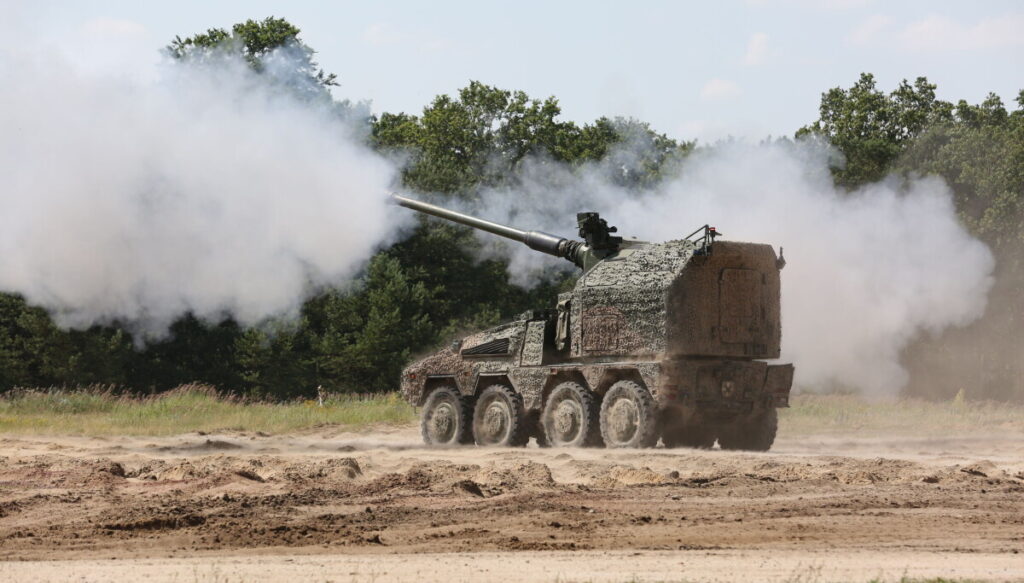
Table of Contents
UK Invests £1B in RCH 155 Remote-Control Howitzers for Army Modernization
The British Army is undergoing a massive artillery overhaul, officially committing £1 billion to acquire 72 next-generation RCH 155 remote-control howitzers. This strategic move aims to bridge the critical capability gap left after the UK donated its aging fleet of AS-90 self-propelled howitzers to Ukraine.
The new system represents a paradigm shift in battlefield artillery, moving away from traditional tracked platforms toward a highly mobile, modular approach. By integrating these advanced weapon systems with the existing Boxer armored vehicle fleet, the Ministry of Defence (MoD) is prioritizing agility and rapid deployment in an increasingly volatile security landscape.
- Main Update: Acquisition of 72 RCH 155 remote-controlled howitzers.
- Key Feature: Fully automated loading and remote fire control.
- Launch/Release: First deliveries expected in 2028.
- Price/Availability: £1 billion ($1.35 billion) total contract value.
Engineering the Future of Field Artillery
The RCH 155 is not merely a gun on a truck; it is a sophisticated, turreted artillery module designed for the 21st-century battlefield. The system utilizes a 155 mm gun integrated into a remote-controlled turret, allowing the crew to operate the weapon from a safe distance, significantly reducing vulnerability to counter-battery fire.
Technical Breakdown and Performance
At the heart of the system is an advanced auto-loading mechanism that allows the RCH 155 to maintain a devastating rate of fire. The integration of a specialized fire control computer ensures that ballistics calculations are handled in real-time, with data transmitted instantly to remote control systems.
- Firepower: Capable of firing up to eight rounds per minute.
- Range: Effective engagement of targets up to 70 km (44 miles) away.
- Mobility: Mounted on the 8×8 Boxer chassis for superior all-terrain traversal.
- Automation: Fully automated loading and firing sequences to minimize crew fatigue.
A Strategic Shift in Vehicle Procurement
The decision to use the Boxer drive module is a critical part of the UK’s broader modern military tech strategy. The Boxer is an eight-wheeled, all-terrain vehicle designed with a modular architecture, allowing different “mission modules” to be bolted onto the same chassis. This ensures that the Army can switch between troop transport, ambulances, and command centers without needing entirely different vehicle fleets.
The manufacturing of these units is a collaborative effort between international partners and domestic industry. Rheinmetall will produce the barrel, breech, and recoil systems at its Telford facility using high-grade British steel from Sheffield Forgemasters. Meanwhile, the chassis and drivetrain will be handled by KNDS in Stockport.
| Feature | Legacy AS-90 | New RCH 155 |
|---|---|---|
| Chassis | Tracked | 8×8 Wheeled (Boxer) |
| Loading | Manual/Semi-Auto | Fully Automated |
| Crew Exposure | High (Inside Turret) | Low (Remote Controlled) |
| Strategic Mobility | Requires Transporters | Self-Deployable High Speed |
Why This Matters for NATO and the UK
This investment is not just about replacing old hardware; it is a direct response to the evolving threat landscape in Eastern Europe. As Russian aggression persists, NATO allies are emphasizing “shoot-and-scoot” capabilities—the ability to fire a volley and relocate before the enemy can pinpoint the origin of the shells.
By investing in AI-driven defense systems and remote-controlled weaponry, the UK is enhancing its ability to project power while protecting its personnel. Furthermore, the deal secures high-skilled manufacturing jobs within the UK, strengthening the domestic industrial base.
What Happens Next
The roadmap to full operational capability is clear but demanding. Following the early capability demonstrator contract signed in late 2025, the first production units are slated for 2028. The MoD expects to reach a “minimum deployable capability” by the end of the decade.
Industry analysts expect this to be the first of many modular upgrades. With the Boxer program now firmly reinstated, the UK may look into additional defense spending initiatives to further diversify the mission modules available to the British Army, potentially including advanced electronic warfare or drone-integrated reconnaissance units.
Source: Official announcement from the UK Ministry of Defence (MoD) and statement by Defence Secretary John Healey MP.