Tesla Robotaxi Teleoperation Failures: NHTSA Documents Remote Driving Crashes
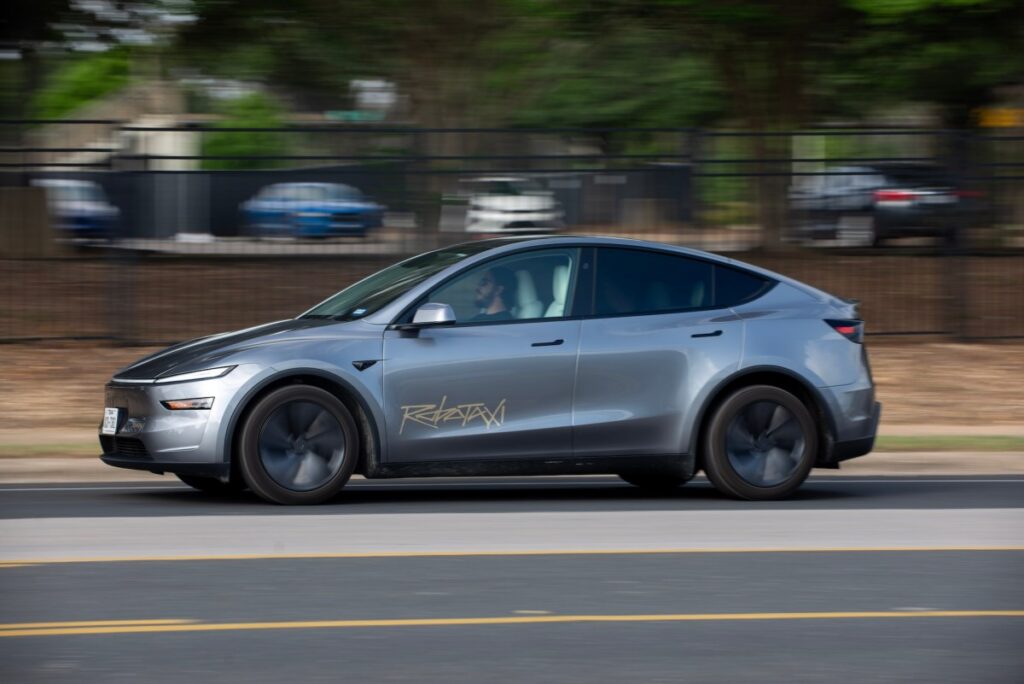
Table of Contents
Tesla Robotaxi Teleoperation Failures: NHTSA Documents Remote Driving Crashes
Tesla’s push toward a fully autonomous ride-hailing future has hit a literal curb. Newly unredacted documents submitted to the National Highway Traffic Safety Administration (NHTSA) reveal that Tesla Robotaxis have crashed at least twice while being remotely piloted by human teleoperators.
The incidents, which occurred in Austin, Texas, highlight a critical vulnerability in the transition between automated systems and human intervention. While Tesla has positioned its remote assistance as a safety net, these reports suggest that the “human in the loop” is not immune to error.
- Main Update: NHTSA unredacted data shows two crashes occurred during remote teleoperation.
- Key Feature: Teleoperators are permitted to move vehicles under 10 mph to clear obstacles.
- Location: Both documented teleoperation crashes took place in Austin, Texas.
- Safety Status: Safety monitors were present in both vehicles; no passengers were onboard.
The Danger of the “Remote Hand-off”
The crashes provide a rare glimpse into how Tesla handles “edge cases” where the Automated Driving System (ADS) becomes stuck. According to the filings, when the AI cannot navigate a specific scenario, a safety monitor requests help from a remote team. A human teleoperator then takes control of the vehicle to guide it to safety.
Anatomy of a Teleoperator Error
The first incident occurred in July 2025. After the ADS struggled to move forward on a street, a teleoperator took control to steer the vehicle toward the side of the road. Instead of a clean recovery, the operator drove the vehicle directly up a curb and into a metal fence.
A similar failure repeated in January 2026. During a navigation support request, a teleoperator steered the vehicle straight, resulting in a 9 mph collision with a construction barricade. The impact caused damage to the front-left fender and tire, proving that remote latency or lack of spatial awareness can be as dangerous as AI hallucinations.
- Lack of depth perception in remote feeds
- Communication latency between operator and vehicle
- Over-reliance on remote intervention for simple obstacles
A Shift in Transparency
For years, Tesla has been criticized for treating its crash data as “confidential business information,” frequently redacting narrative descriptions in regulatory filings. This week, however, the company shifted its stance, allowing the NHTSA to release detailed descriptions of 17 crashes involving the Robotaxi network since last year.
While some of these incidents mirror those seen by Waymo’s autonomous fleet—where other drivers crash into the robotaxi—several involve the Tesla ADS actively causing the collision. This includes clipping mirrors of other cars and failing to avoid animals in the road.
| Incident Type | ADS Controlled | Teleoperator Controlled |
|---|---|---|
| Curb/Fence Strike | Failure to move | Crashed |
| Construction Barricade | Stalled navigation | Crashed |
| Parking Lot Chain | Crashed | N/A |
| Animal Collision | Crashed | N/A |
Why Teleoperation Risks Scale
The reliance on remote operators is a double-edged sword. While it prevents vehicles from becoming permanent roadblocks, it introduces a new layer of risk. Unlike a driver inside the car, a teleoperator relies on camera feeds that may have blind spots or lag, making precision maneuvers—like avoiding a curb—surprisingly difficult.
This technical hurdle may explain why Tesla is scaling its network more slowly than Elon Musk originally predicted. The company is currently fighting a battle on two fronts: perfecting the FSD software updates and ensuring that the humans tasked with “saving” the AI don’t make the situation worse.
Comparing the Competition
Industry rivals like Zoox and Waymo have reported a higher volume of crashes, but they also operate at a significantly larger scale. Tesla’s struggle is that its failures are appearing in a much smaller deployment window, suggesting that the “unsupervised’ aspect of the network is still far from production-ready.
What Happens Next for Tesla?
The NHTSA’s decision to unredact this data puts Tesla under a microscope. As the company pushes for a wider rollout of its ride-hailing vision, the regulatory pressure to prove that teleoperation is a safety feature—rather than a liability—will intensify.
For now, the presence of safety monitors remains the only thing preventing these low-speed mishaps from becoming high-profile tragedies. As Tesla attempts to remove the driver entirely, the ghost in the machine—and the human in the remote center—must be perfectly synced.
If you’re tracking the evolution of autonomous mobility, keep an eye on the latest EV tech regulations, as the NHTSA may soon mandate stricter standards for remote operation latency and operator certification.
Source: Unredacted filings submitted to the National Highway Traffic Safety Administration (NHTSA).