OpenAI Brings Codex to Mobile — Now Manage Your Code Remotely
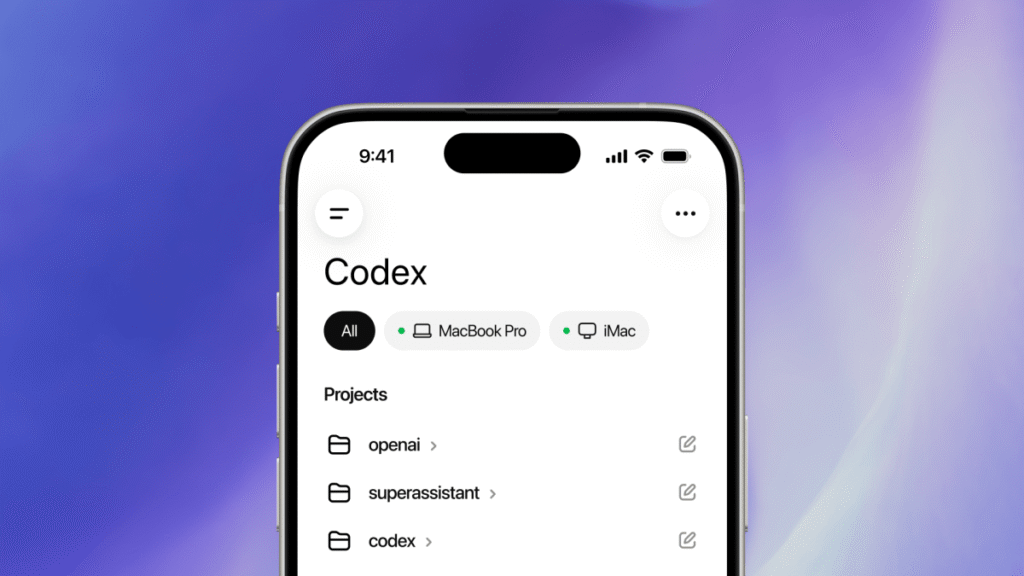
Table of Contents
OpenAI Brings Codex to Mobile — Now Manage Your Code Remotely
OpenAI has officially integrated Codex into the ChatGPT mobile app, marking a significant shift in how developers interact with their coding environments. The move transforms the smartphone from a simple communication tool into a remote command center for complex software development workflows.
For the first time, developers can monitor and manage their Codex live environments directly from iOS and Android devices. This update isn’t just about viewing code; it is about active, remote orchestration of development tasks while away from the primary workstation.
- Feature: Mobile integration of Codex within the ChatGPT app.
- Availability: Currently in preview for all plan tiers on iOS and Android.
- Core Capability: Remote monitoring, command approval, and model switching.
Breaking the Tether: What’s New in Codex Mobile
The integration allows users to maintain a persistent connection to their development threads. Instead of waiting to return to a desktop, developers can now review outputs, approve specific commands, and change AI models on the fly.
According to an official statement from OpenAI, this update represents a move toward a more flexible ecosystem. The company emphasized that this is “more than the ability to remotely control a single task,” but rather a comprehensive way to work across all active threads from a mobile interface.
Remote Management Capabilities
The mobile experience is designed to handle the heavy lifting of agentic workflows. Users can now dispatch new tasks to their computers or pivot their strategy by switching the underlying model without needing to SSH into a server or use a third-party remote desktop app.
This creates a seamless bridge between the conceptual phase of coding—where a developer might brainstorm a logic fix on their phone—and the execution phase happening on a powerful desktop environment.
The Rise of Agentic Coding
This mobile rollout is part of a broader strategy by OpenAI to make Codex more autonomous. Just last month, the company enabled Codex to run in the background of desktop environments, allowing it to execute multi-step tasks without constant human supervision.
Furthermore, the recent introduction of a Chrome extension allows the AI agent to interact with live browser sessions. When combined with the new mobile integration, OpenAI is effectively building a “remote-first” coding agent that exists across the browser, the desktop, and the pocket.
Technical Synergy: Background Execution and Mobile Control
| Feature | Desktop Environment | Mobile Integration |
|---|---|---|
| Execution | Full Background Autonomy | Remote Command & Control |
| Interface | IDE / Browser Extension | ChatGPT App (iOS/Android) |
| Control | Direct Manipulation | Approval-based Orchestration |
Why This Matters: The AI Coding War
The move by OpenAI is a direct response to the intensifying competition with Anthropic. In February, Anthropic released “Remote Control,” a similar feature that allows users to monitor Claude Code’s progress from a distance.
We are witnessing a transition from “AI assistants” that simply write snippets to “AI agents” that manage entire repositories. The battle is no longer just about who has the best LLM, but who provides the most frictionless developer experience (DX).
For tech professionals and businesses, this means a drastic reduction in downtime. The ability to approve a critical deploy or fix a breaking bug via a mobile notification could save hours of productivity in a fast-paced CI/CD pipeline.
What Happens Next?
Looking forward, it is expected that OpenAI will further refine the mobile UI to include more robust debugging tools. Early leaks suggest a potential move toward a simplified “mobile IDE” view that allows for minor code edits directly within the app.
As these tools become more autonomous, the focus will likely shift toward security and permissions. Ensuring that a mobile device can safely approve commands on a production server will require advanced authentication, possibly integrating more deeply with biometric security standards.
For now, developers on all plans can access this preview. It remains to be seen if this will drive a larger migration of developers toward the OpenAI ecosystem over the growing popularity of Claude Code in corporate environments.
Source: Official OpenAI announcement and company statement regarding Codex mobile integration.