Game Changer: OpenAI Codex Now on Mobile for Developers (Oct 2024) — See How It Works
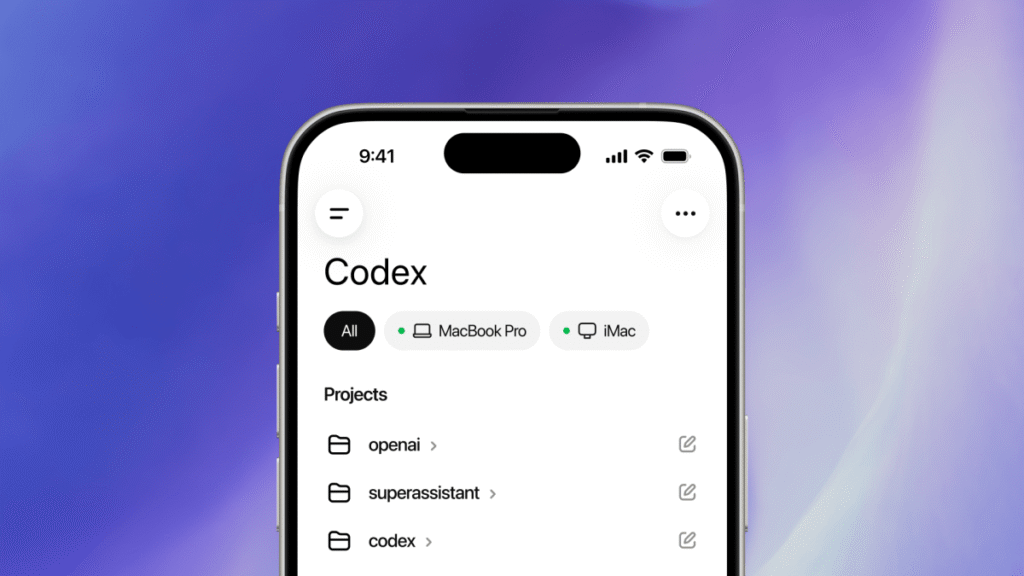
Table of Contents
OpenAI has officially expanded its coding capabilities to the palm of your hand, integrating OpenAI Codex directly into the ChatGPT mobile application. This strategic update allows software engineers and developers to monitor, manage, and execute complex development workflows remotely from any iOS or Android device, marking a significant shift in how AI-driven coding is handled on the go.
- Key Feature: Remote monitoring of live Codex environments.
- Availability: Currently in preview for all subscription plans.
- Platform Support: Fully compatible with iOS and Android.
- Core Capability: Ability to approve commands and switch models via mobile.
Redefining Remote Development Workflows
The integration of Codex into the mobile ecosystem is not merely a mirroring of the desktop experience. According to a statement released by OpenAI on Thursday, the update transcends the ability to simply dispatch a single task to a computer. Instead, it provides a comprehensive control center where users can navigate multiple threads, review real-time outputs, and approve critical commands without needing to be tethered to a workstation.
For many professionals, this means the ability to oversee long-running scripts or complex deployments while away from their desks. By allowing developers to change models or initiate new tasks on the fly, OpenAI is effectively turning the smartphone into a remote terminal for AI-assisted engineering. This move follows the recent introduction of a Chrome extension that enables the agent to operate within live browser sessions, further bridging the gap between the AI and the actual execution environment.
The Battle for Agentic Supremacy
This release comes at a pivotal moment in the AI arms race, specifically the competition between OpenAI and Anthropic. Just last month, Anthropic debuted ‘Remote Control’ for Claude Code, a feature that allows users to monitor their AI’s progress from a distance. The rapid succession of these updates highlights a growing trend toward “agentic” coding tools—AI that doesn’t just suggest code, but actively manages the environment and executes tasks autonomously.
Industry analysts note that while ChatGPT maintains a massive user base, Anthropic’s Claude Code has seen a surge in popularity among enterprise clients and high-level tech professionals. By bringing Codex to mobile, OpenAI is attempting to reclaim the narrative and ensure its ecosystem remains the most versatile for developers who require constant connectivity.
Why This Shift Matters for the Industry
The transition to mobile-accessible coding agents represents a fundamental change in developer productivity. Traditionally, “coding on a phone” was a contradiction in terms, limited to reading documentation or checking logs. However, with the ability to approve commands and manage autonomous background tasks—a feature OpenAI recently rolled out for desktop environments—the smartphone becomes a supervisory tool.
This development reduces downtime and allows for faster iteration cycles. If a background agent encounters an error or requires a human decision to proceed, the developer can now resolve the bottleneck via a notification on their phone, rather than waiting until they return to their office. This efficiency is expected to be a major selling point for startups and agile development teams.
What to Expect Moving Forward
Looking ahead, it is expected that both OpenAI and Anthropic will double down on autonomous capabilities. We may see deeper integrations with cloud IDEs and more sophisticated notification systems that alert developers to specific code failures in real-time. As these tools evolve, the role of the developer is shifting from a primary writer of code to a supervisor of AI agents. While this move is currently in preview, a full global rollout is anticipated soon, potentially setting a new standard for how software is built and maintained in the AI era.
Source: Official OpenAI Company Announcement