Canon EOS R6V Debuts in India With Built-in Cooling and 7K RAW
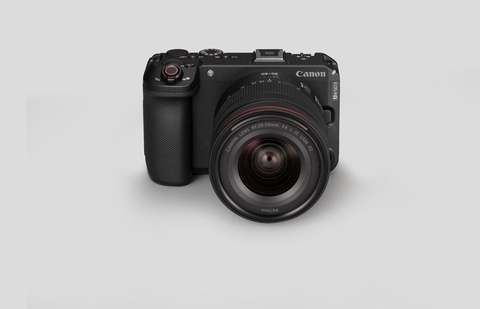
Table of Contents
Canon has officially expanded its high-end mirrorless ecosystem in India with the launch of the EOS R6V, a powerhouse designed specifically to bridge the gap between traditional photography and professional cinema production. Alongside the body, Canon introduced the RF 20–50mm F4L IS USM, marking a significant shift in how the brand approaches video-centric optics.
For years, mirrorless cameras have struggled with the ‘overheating ghost’—the dreaded warning that cuts a recording short just as the action peaks. Canon is addressing this head-on by integrating a built-in cooling fan into the EOS R6V. This hardware addition allows the camera to sustain high-bitrate recording for extended periods, making it a viable tool for documentary filmmakers and wedding videographers who cannot afford a shutdown mid-ceremony.
At the heart of the EOS R6V is a 32.5MP full-frame CMOS sensor. While many cameras in this class market themselves as ‘hybrids,’ Canon is being transparent: the R6V is built primarily for the video-first creator. The standout specification is the support for 7K Open Gate RAW, providing maximum flexibility in post-production cropping and framing, as well as standard MP4 recording for faster turnarounds.
To ensure the image quality meets cinema standards, the camera supports Canon Log 2 and Log 3 profiles, which maximize dynamic range. Professional editors will appreciate the ability to import custom LUTs directly into the camera, allowing for a more accurate visual representation of the final grade during the shoot. For those managing complex audio setups, the addition of four-channel audio recording ensures that high-fidelity sound is captured without the need for external recorders in every scenario.
Stability is another area where Canon has pushed the envelope. The EOS R6V features a sophisticated five-axis in-body image stabilisation (IBIS) system capable of 7.5 stops of correction. When paired with compatible lenses, this stabilization becomes even more robust. To complement the IBIS, Canon has included Digital Movie IS, which uses intelligent tracking to keep handheld shots smooth and cinematic, reducing the reliance on bulky gimbals for quick-turnaround projects.
The Power Zoom Revolution: RF 20–50mm F4L IS USM
One cannot discuss the R6V without the accompanying RF 20–50mm F4L IS USM lens. This isn’t just another zoom; it is Canon’s first full-frame L-series lens featuring a built-in power zoom system. In the world of professional video, manual zooming can often be jerky or inconsistent. The power zoom solves this by offering 15 adjustable zoom speed levels, allowing creators to execute buttery-smooth transitions that mimic high-end cinema glass.
Because the lens utilizes an internal zoom mechanism, its physical length remains constant regardless of the focal length. This is a critical advantage for users utilizing gimbals, as the center of gravity doesn’t shift during a zoom, eliminating the need to re-balance the rig. When combined with the R6V’s body stabilization, the lens delivers a staggering eight stops of correction, making it a formidable tool for handheld cinematography.
Technical Specifications Breakdown
| Feature | Specification | | :— | :— | | Sensor | 32.5MP Full-Frame CMOS | | Max Resolution | 7K Open Gate RAW | | Cooling | Integrated Active Cooling Fan | | Stabilization | 5-Axis IBIS (Up to 7.5 stops) | | Burst Rate | 40fps (Electronic Shutter) | | Video Profiles | C-Log 2 / C-Log 3 | | Lens Zoom | Power Zoom (15 Speed Levels) |
Why This Matters for the Indian Market
The pricing strategy for the EOS R6V reflects its positioning as a professional tool. The body is priced at Rs. 2,35,995, and the RF 20–50mm lens is listed at Rs. 1,42,995. For creators looking for a complete ecosystem, the full kit is available for Rs. 3,55,995.
This launch signals a shift in the Indian creator economy. As high-production-value short-form content and independent documentaries rise, there is a growing demand for tools that offer the quality of a Cinema EOS camera but in the form factor of a mirrorless device. By focusing on heat management and power-zoom optics, Canon is directly challenging the dominance of specialized cinema rigs and high-end mirrorless competitors from Sony and Panasonic.
Future Implications and Verdict
The EOS R6V is more than just a spec bump; it is a statement on the convergence of stills and cinema. The inclusion of a dedicated tripod socket for vertical shooting and an interface that rotates automatically for portrait content shows that Canon is paying attention to the social-media-first era of filmmaking.
Looking ahead, we expect this ‘video-first’ philosophy to trickle down into other R-series models. The integration of active cooling may soon become a standard for any mirrorless camera attempting to tackle 6K or 8K recording. For now, the EOS R6V stands as a compelling choice for those who need a reliable, high-resolution workhorse that can survive a grueling day of filming in the Indian heat without breaking a sweat.