NASA’s Moon Ambitions Face a Biological Blind Spot
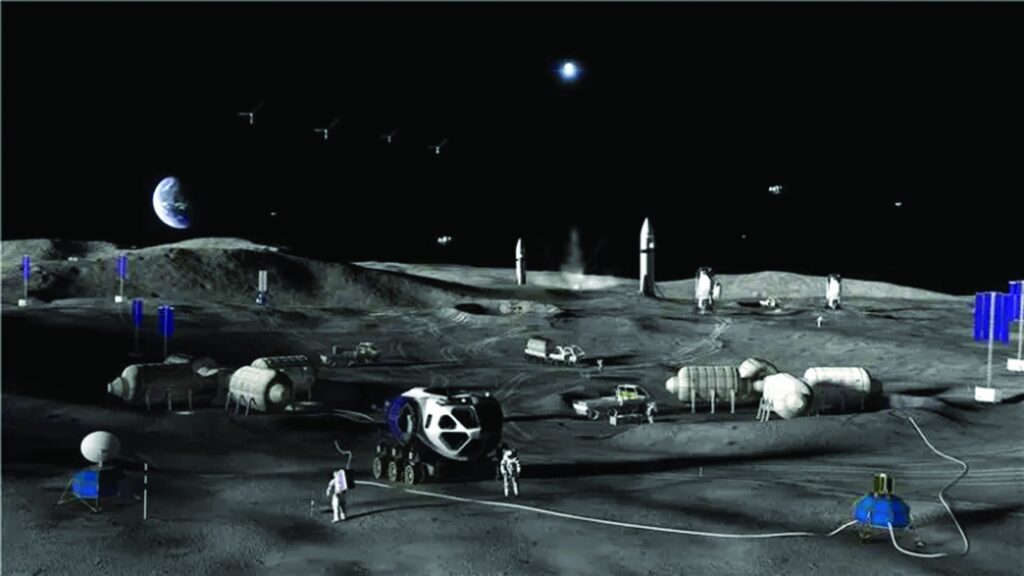
Table of Contents
The Rush for a Lunar Foothold
In December 1972, Gene Cernan and Harrison Schmitt concluded the Apollo 17 mission, marking the last time humans stood on the lunar surface. For over half a century, the moon remained a place of brief visits and geological sampling. That era of transient exploration is officially ending.
NASA’s recent ‘Ignition’ event detailed an aggressive, three-phase roadmap aimed at establishing a permanent lunar presence by 2030. The strategy moves from initial robotic demonstrations to semi-habitable infrastructure, ultimately culminating in a continuous human presence. To get there, the agency is leaning heavily on a new commercial framework dubbed “Science as a Service.” This model shifts NASA away from owning the entire end-to-end lifecycle of technology, instead partnering with research institutions and private industry to validate systems and accelerate their transition to commercial markets.
The coalition is already vast. From Japan’s pressurized rovers to Italy’s habitation modules, the infrastructure is being crowdsourced from global partners. This network is intended to turn the moon into a laboratory for deeper space ambitions, including the development of nuclear propulsion systems for eventual Mars transits. However, as the engineering blueprints solidify, a critical gap is emerging in the agency’s priorities: the biology of the humans inhabiting these structures.
The Partial Gravity Problem
While the “Science as a Service” Request for Information (RFI) covers essential domains like Earth science, astrophysics, and space weather, it conspicuously omits health and biological sciences. This is a significant oversight given that the physiological toll of the lunar environment is largely unknown.
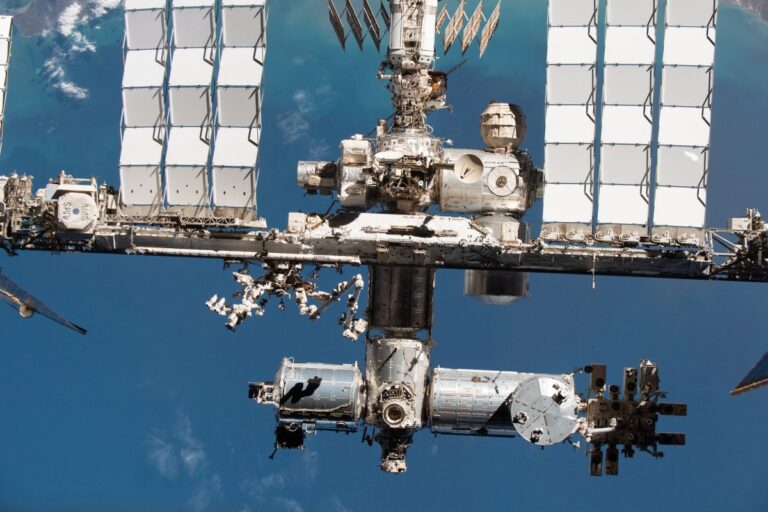
For decades, the International Space Station (ISS) has provided invaluable data on microgravity. We understand how bone mineral density drops and how cardiovascular systems decondition in zero-g. But the moon is not zero-g; it is one-sixth gravity.
Physiological responses to gravity are rarely linear. There is no guarantee that the countermeasures developed for the ISS will work in a partial-gravity environment over months or years. We do not yet know if a crew member’s bones will fracture after six months of lunar habitation or how the human immune system adapts to the specific radiation profile of the lunar surface.
Beyond gravity, there is the issue of lunar regolith. The moon’s dust is not like Earthly dust; it is abrasive, chemically reactive, and capable of permanently scarring human lungs. Without specific, matured countermeasures that go beyond simple habitat filtration, the biological cost of a permanent base could be prohibitively high.
From Engineering to Life Support
Every extreme human outpost—from the frozen research stations of Antarctica to the ISS—eventually stops being an engineering challenge and becomes a life sciences management problem.
True self-sufficiency on the moon requires moving beyond Earth-based resupply chains. This means mastering closed-loop air and water recycling, which relies on complex biological and chemical processes. It requires controlled-environment agriculture and microbial management in sealed, irradiated environments. In short, biomanufacturing and engineered biological systems are not academic luxuries; they are operational necessities for any base that intends to survive without a constant umbilical cord to Earth.
A Framework Without a Focus
The tragedy of the current gap is that the machinery to fix it already exists. The “Science as a Service” framework is an excellent blueprint for shared validation and technology transition. It has already worked for satellite operators and Earth observation companies. Applying this same partnership architecture to the biotech sector would allow NASA to tap into a growing ecosystem of private companies already flying microgravity experiments and developing space-based production platforms.
Academic medical centers and international agencies are already investing in space pharmacology and radiation biology. The capability and the interest are there; what is missing is the institutional alignment within the Ignition mandate.
Driven by the December 2025 Executive Order on Ensuring American Space Superiority, the push for a sustained lunar presence is now a matter of national policy. But a presence that ignores the biological reality of its inhabitants is a fragile one. If the goal is truly a sustained human presence, the science of keeping humans alive and healthy must be as prioritized as the rockets used to get them there.