Franco-German Defense Dream Collapses as FCAS Fighter Jet Project Is Scrapped
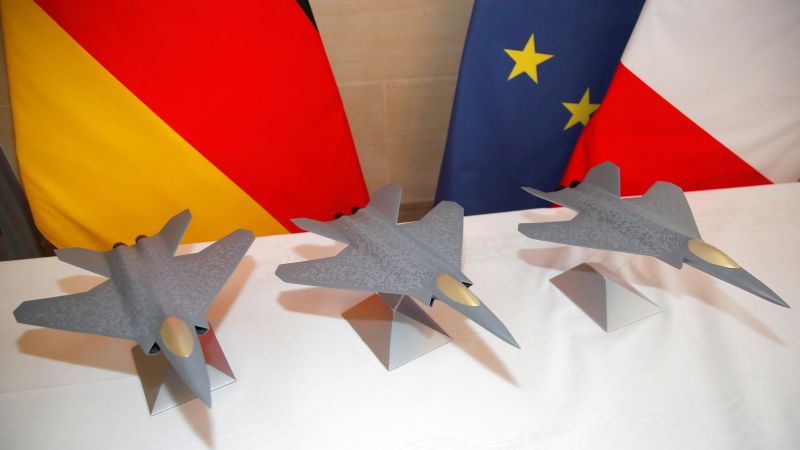
Table of Contents
A Billion-Euro Deadlock
The ambitious blueprint for Europe’s sovereign air superiority has effectively collapsed. In a decisive move that underscores the persistent friction between European industrial giants, German Chancellor Friedrich Merz and French President Emmanuel Macron have agreed to scrap the core development of the Future Combat Air System (FCAS), the landmark project intended to produce a sixth-generation fighter jet.
The decision follows a series of fraught discussions on the sidelines of the EU-Western Balkans summit in Montenegro. According to German officials, Merz explicitly advised Macron against further pursuit of the joint aircraft, concluding that the months-long deadlock between the primary industrial contractors had reached an impasse from which there was no realistic recovery.
At the heart of the failure is a toxic blend of corporate rivalry and strategic disagreement. The project pitted the European aerospace behemoth Airbus—representing the interests of Germany and Spain—against France’s Dassault Aviation. The two firms remained unable to align on critical issues regarding intellectual property, leadership of the next development phase, and the fundamental technical specifications of the airframe.
Divergent Doctrines and Corporate Ego
While the public narrative focused on diplomatic cooperation, the internal friction was driven by fundamentally different military requirements. Chancellor Merz has been vocal in questioning the utility of a manned sixth-generation fighter for the German Luftwaffe, arguing that Germany has little need for a nuclear-capable jet designed for aircraft carrier operations—a core requirement for the French Navy.
This strategic drift is reminiscent of France’s exit from the Eurofighter program in the 1980s, suggesting a recurring pattern where French desires for total design autonomy clash with the collaborative, consortium-based approach favored by Germany. Industry insiders suggest that Dassault Aviation was unwilling to share the “crown jewels” of its aerospace intellectual property with Airbus, which in turn demanded a more equitable distribution of workshare and control.
The fallout is not just diplomatic but industrial. The IG Metall union in Germany quickly welcomed the decision, with Deputy Chairman Jürgen Kerner describing it as a “difficult but necessary” move. The union’s reaction suggests that the workforce had long viewed the partnership as skewed, which had created instability within Germany’s domestic aviation hubs.
The ‘Combat Cloud’ Consolation
To avoid the political embarrassment of a total collapse, the two nations are reportedly pursuing a face-saving compromise. Sources indicate that while the physical fighter jet is dead, the periphery of the project—specifically the “combat cloud” and the integration of unmanned loyal wingmen drones—may continue under the FCAS brand.
However, defense analysts view this as largely symbolic. The “combat cloud” refers to a classified network of high-security links designed to coordinate manned and unmanned assets. While technologically valuable, these systems are generic components of modern electronic warfare and do not constitute the strategic deterrent that a sixth-generation stealth fighter would have provided.
Strategic Implications for Europe
The collapse of the FCAS (or SCAF, in French) occurs at a precarious geopolitical moment. With Russia’s military aggression persisting and the United States pressuring European allies to accelerate re-armament, the failure to build a home-grown interceptor leaves a vacuum in Europe’s long-term defense strategy.
Douglas Barrie, a senior fellow for military aerospace at the International Institute for Strategic Studies (IISS), noted that the failure sends a troubling signal to both Washington and Moscow regarding Europe’s ability to integrate its defense industrial base. By failing to resolve a 100-billion Euro dispute, the EU has demonstrated that national industrial interests still outweigh the goal of strategic autonomy.
For now, the void left by the FCAS is likely to be filled by increased reliance on American platforms, such as the F-35, further cementing U.S. influence over European airspace and delaying the continent’s aspiration to become a truly independent aerospace power.